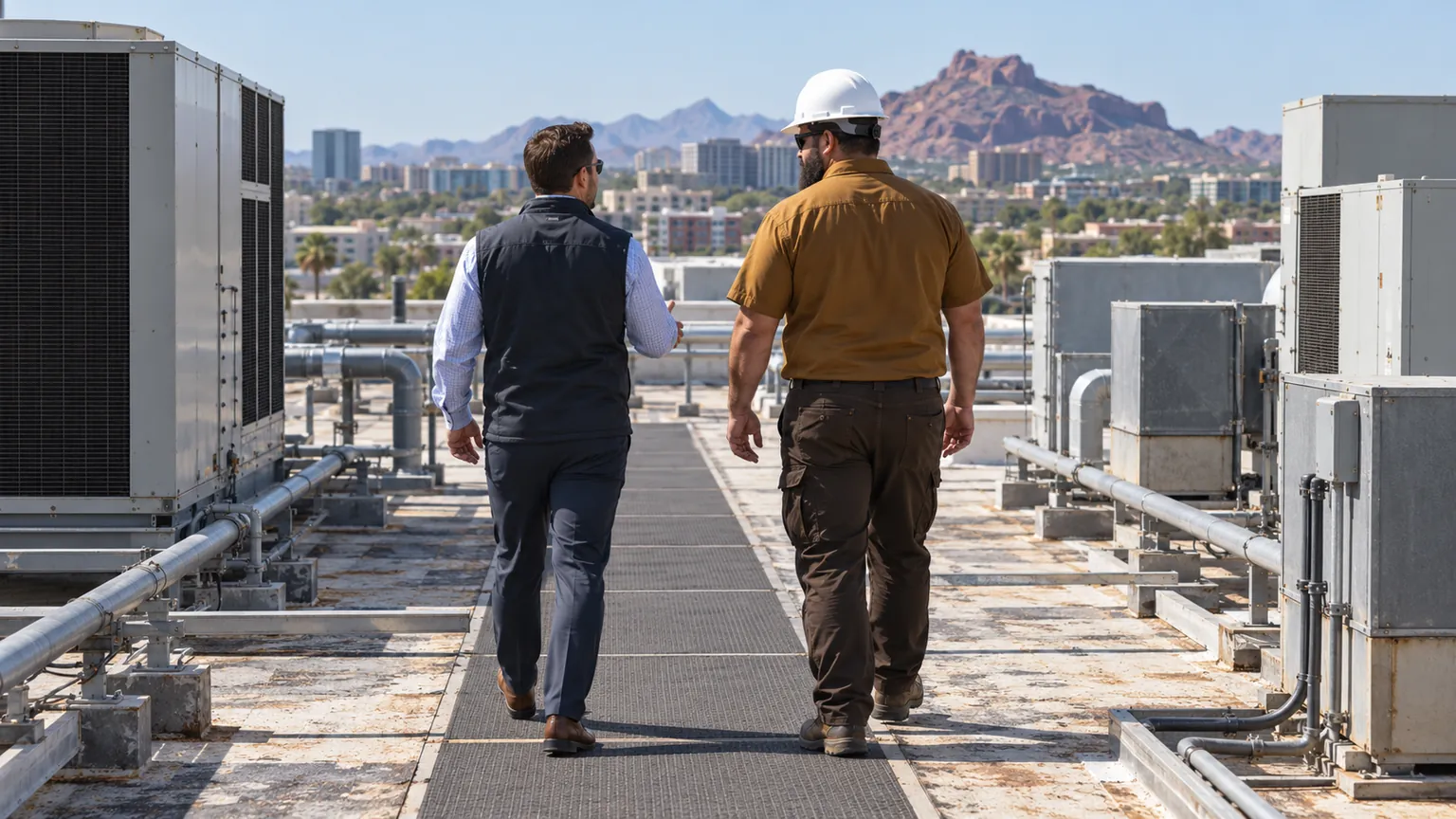
Industrial Roof Repair
Shops with exhaust fans and process vents get residue cleanup and curb work planned around production, with lockout handled by your own team.
Industrial roof repair
Priest And Broadway
Commercial roof repair in the Tempe Maker District centers on skylights, smoke vents, and their curbs, the openings older light-industrial shop roofs depend on for light and air.
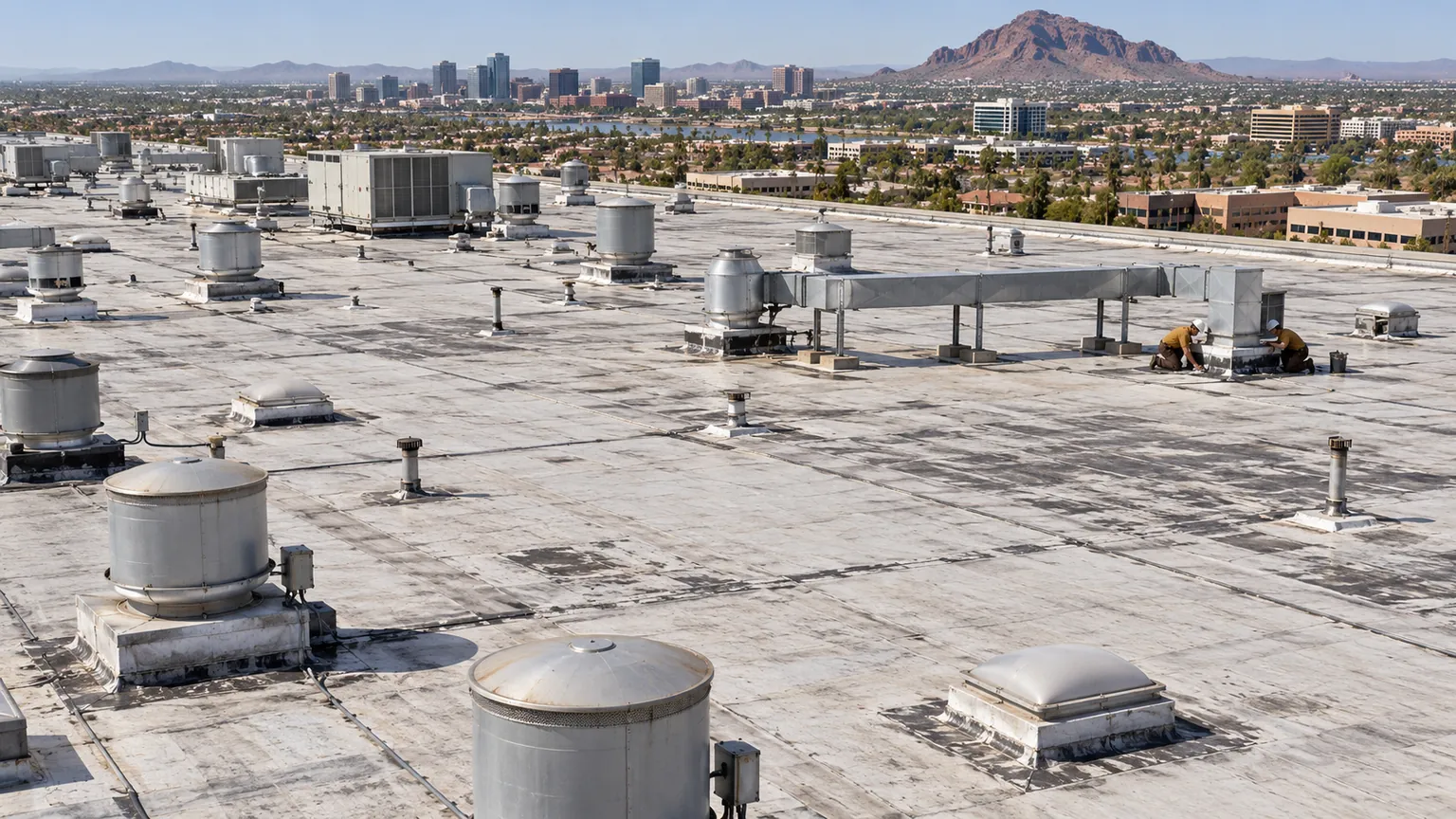
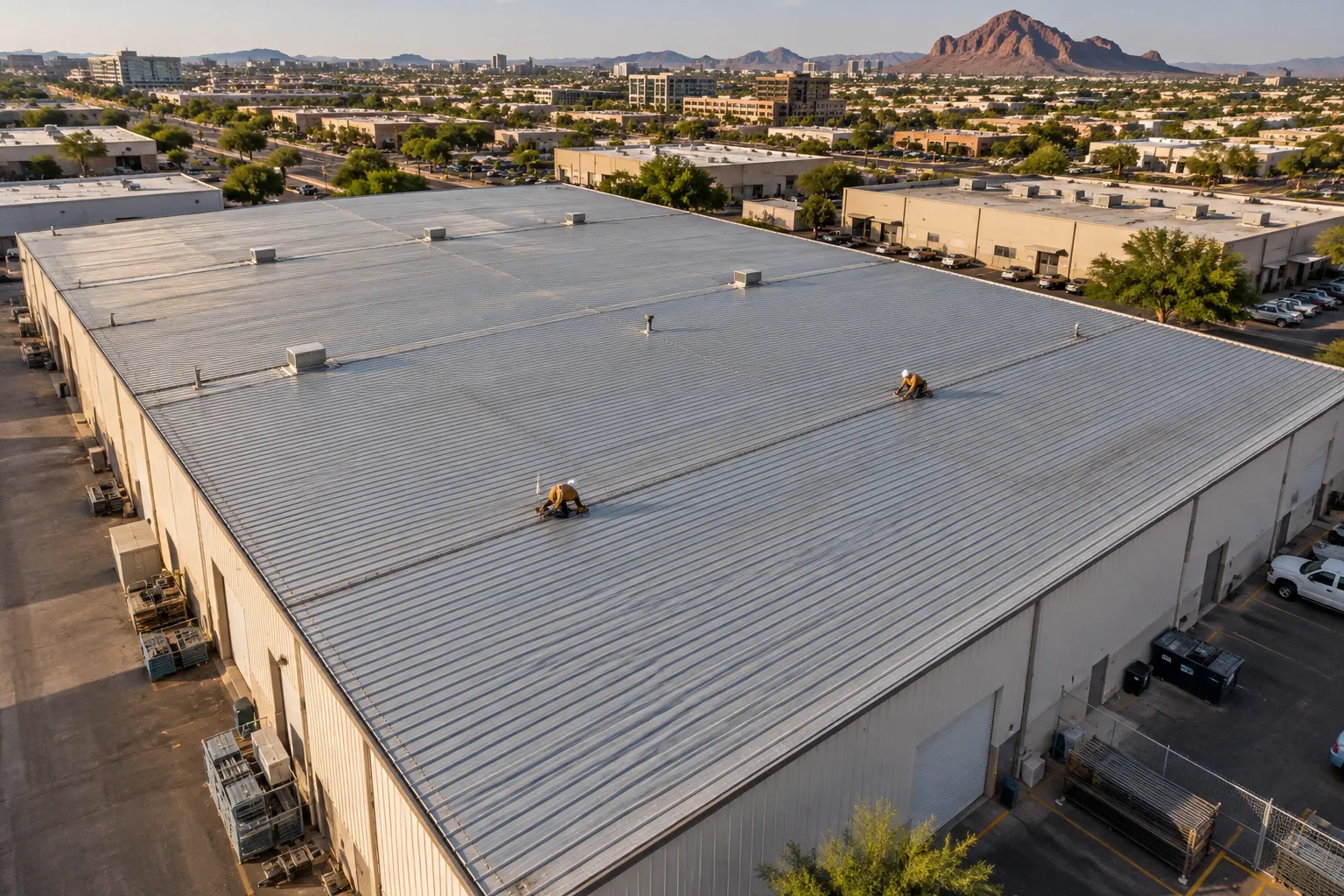
The Maker District covers more than 600 acres of commercial, industrial, and manufacturing buildings around Priest and Broadway, according to the City of Tempe.
Many of those shop roofs carry rows of skylights and smoke vents. Each one sits on a curb, and each curb is a place where the roof stops and turns, which is where leaks start. Drips under them land on benches and machines.
On a shop roof with skylights and vents, most leaks trace to the openings rather than the open field, so each opening gets numbered and checked in turn.
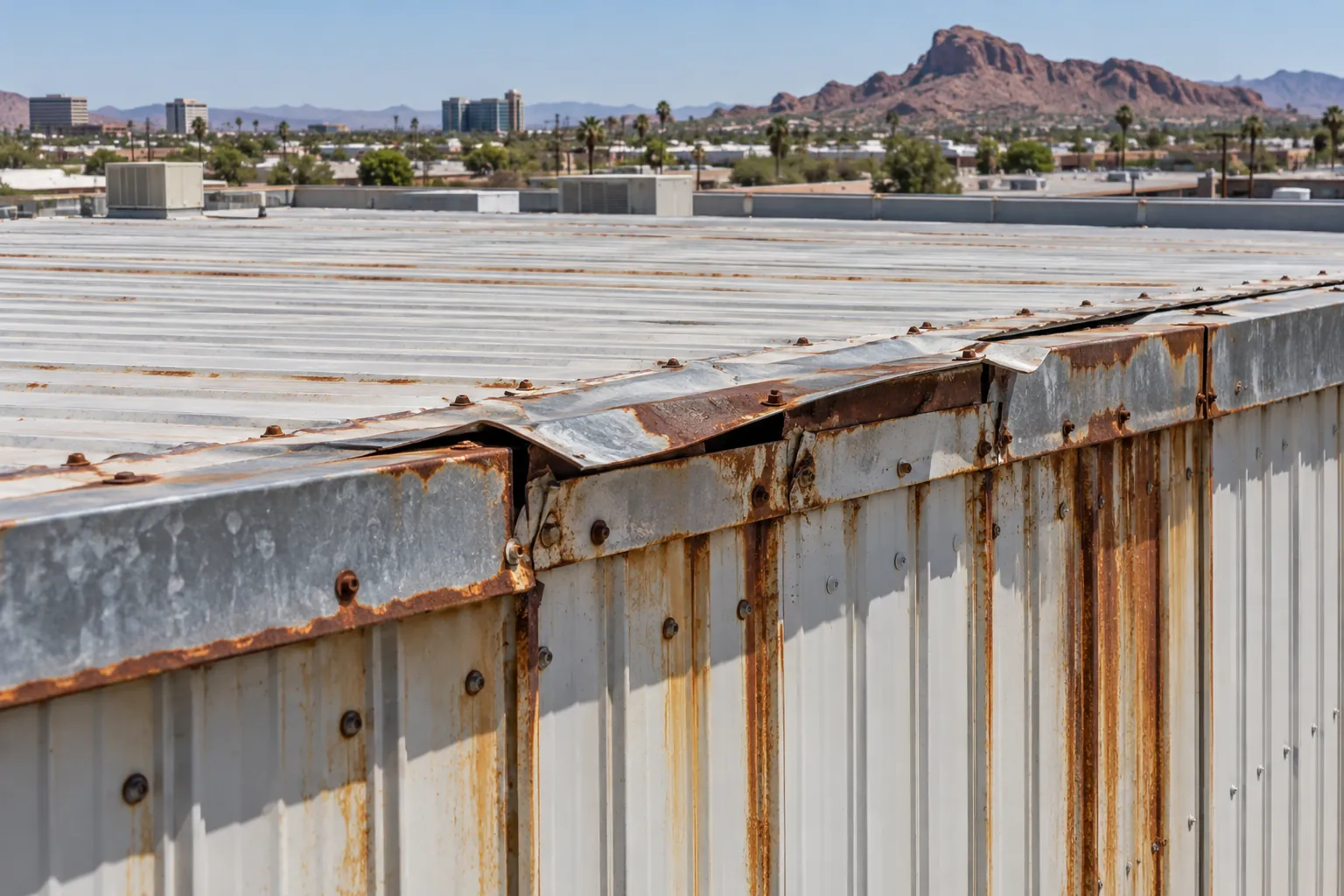
Corners crack where the flashing folds around the curb, and the drip lands on the shop floor right under the skylight. New flashing at the corners usually ends the drip, and the skylight panel stays in place.
Older fiberglass panels craze and yellow in the sun, then crack. Matching panels swap in on the same frame. Panels that have turned brittle get swapped before they break through and let rain straight in.
Vents that are meant to open in a fire sit closed for years, and their gaskets dry out until wind-driven rain gets past. New gaskets restore the seal without changing how the vent opens.
Metal laps cut around skylights and vents loosen first, since the cut edge lost its stitch screws during the original install. Fresh stitch screws along those cut laps close the gaps at each opening.
Edge gutters on shop roofs fill with dust and debris, overflow during monsoon storms, and send water back under the panels. Cleaning the gutters and checking the outlets keeps overflow off the roof panels.
Screws along the purlin lines back out under daily heat, the same as anywhere on a metal shop roof. New oversized fasteners with washers go in wherever screws have lifted.
Skylight leaks land in the middle of the shop floor, often right on a workbench or machine.
Shop roofs here call for these two services most often.
Shops with exhaust fans and process vents get residue cleanup and curb work planned around production, with lockout handled by your own team.
Industrial roof repair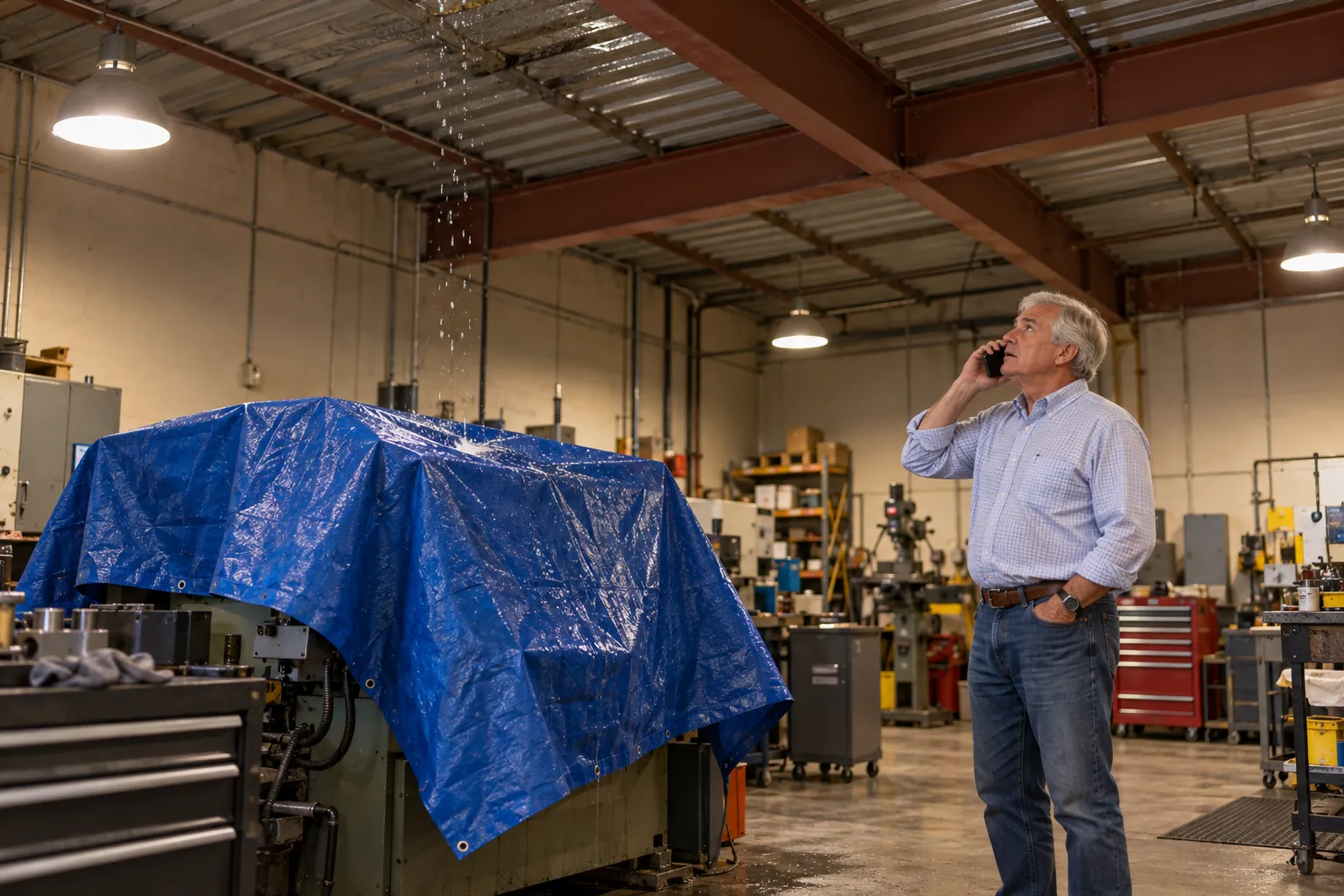
Drips on the shop floor get traced to the right skylight, vent, or lap before any panel comes off, so only the leaking opening gets opened up.
Leak tracingCall and tell us whether it drips at the panel center or along the edges. That tells us whether it is the panel or the curb. A photo of the drip spot helps.
Skylights and vents get their own checks before the rest of the roof, since they cause most of the drips on a shop floor.
Every skylight and smoke vent gets checked for panel cracks, curb flashing, gaskets, and screens, then the fastener rows and gutters. Openings get numbered so drips inside match them later.
On The Roof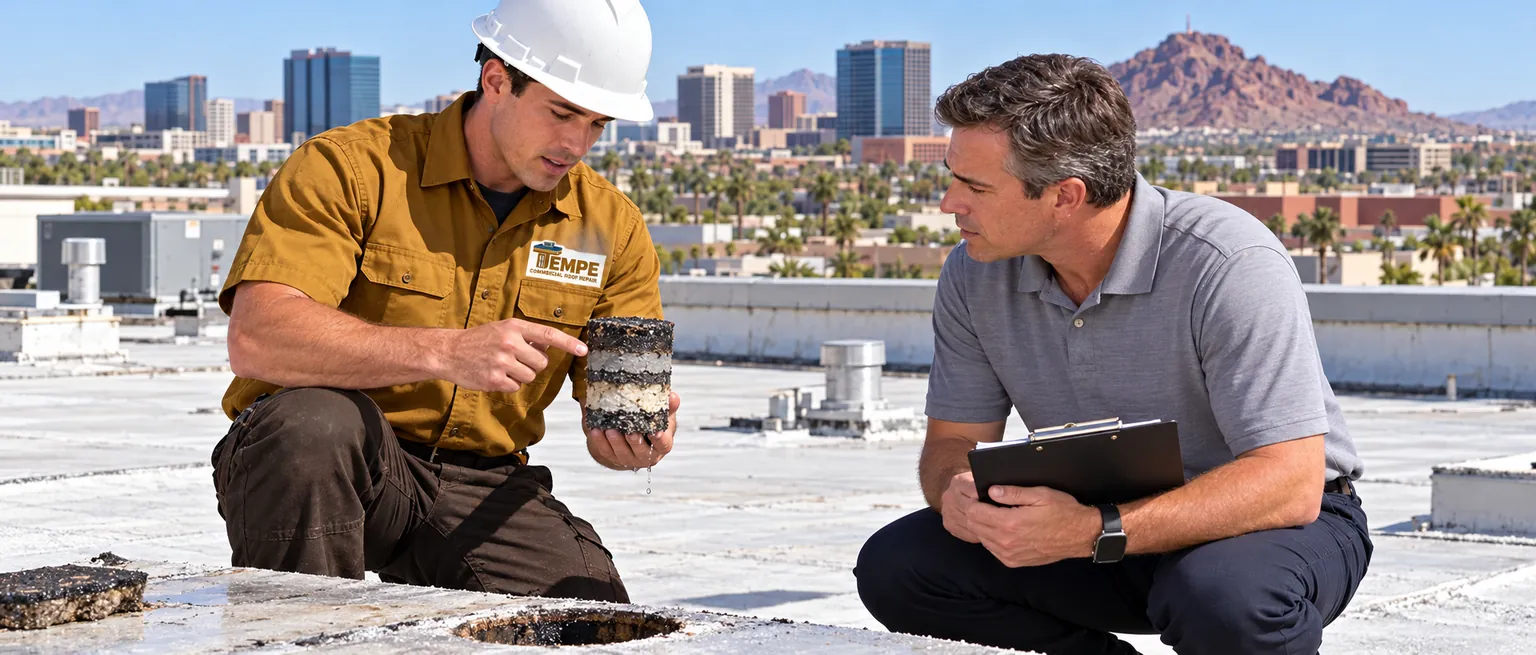
Drips on the shop floor get matched to the opening above, and each skylight gets a number on a roof sketch. Each opening gets a photo from above and from below.
On The RoofBenches and machines under the openings get covered, and you choose the hours when panels can come off. Work under skylights waits until benches below are clear.
At The BuildingCurbs get reflashed, cracked panels swap for matching ones, vent gaskets get replaced, and nearby laps get new stitch screws. Panels get swapped one at a time so the shop stays covered.
On The Roof
Each repaired opening gets a hose test with someone watching the floor below. Photos show every skylight and vent by number. Your sketch shows which openings got work and which held.
PaperworkThe Maker District sits around Priest and Broadway, near I-10, a short drive from Guadalupe and central Tempe.
Answers on skylights, smoke vents, and older layered roofs.
Often, yes, though the layers decide how far the repair can go. Older shop roofs commonly carry a built-up gravel roof with one or more re-covers on top, and each layer can trap water, so a core cut shows what is there first.
Leaks at flashings, parapets, and scuppers usually repair well. Wet layers, blisters spreading across the field, or a deck carrying too much weight point toward tear-off.
The City of Tempe has design guidelines for the Maker District that cover topics such as adaptive reuse. Ask the city whether a visible roof change falls under them.
That depends on whether you still want the daylight. Matching panels keep the light, while covering an opening means flashing a closed curb or removing it.
The curb flashing or the perimeter fasteners usually fail before the panel does. Drips along the edge point to the curb; drips in the middle point to a cracked panel.
They get checked on every visit. A damaged or missing screen gets noted, and you decide on replacement with your safety team.
Crazing, yellowing, and fine cracks across the panel mean it has lost strength. Once a panel turns brittle, swapping it beats patching, since patches do not hold on fiberglass that is breaking down.
Yes. Their lids have to open when called on, so the repair reseals gaskets and curbs without blocking the hinge or the release.
Your fire protection contractor. The roof crew repairs the curb and gasket, and the vent operation stays with the people who maintain it.
Tell us how many skylights and vents your shop roof has. We will check each one and repair the curbs and panels that leak.
Want A Call Back About Your Roof?
Leave a name and number, or call (623) 310-0181 now.