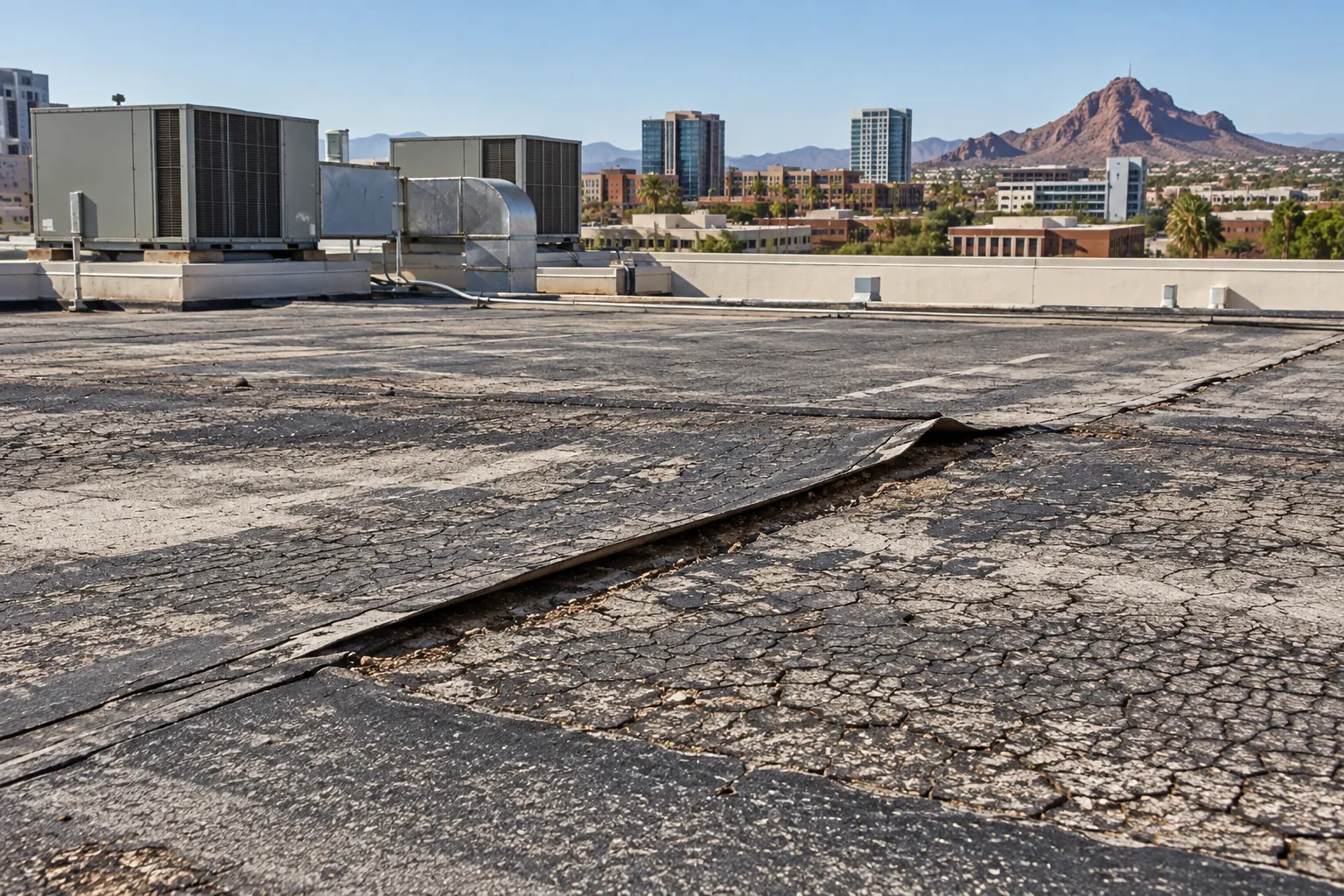
Flat Roof Repair
Pitch pans, pipe boots, and curb flashing on center roofs are flat roof details, repaired with the sheet already there.
Flat roof repair
City Of Phoenix · I-10
Commercial roof repair in Ahwatukee Foothills often means sorting out penetration clutter: pitch pans, conduit, sign wiring, and curbs left behind by tenant equipment changes.
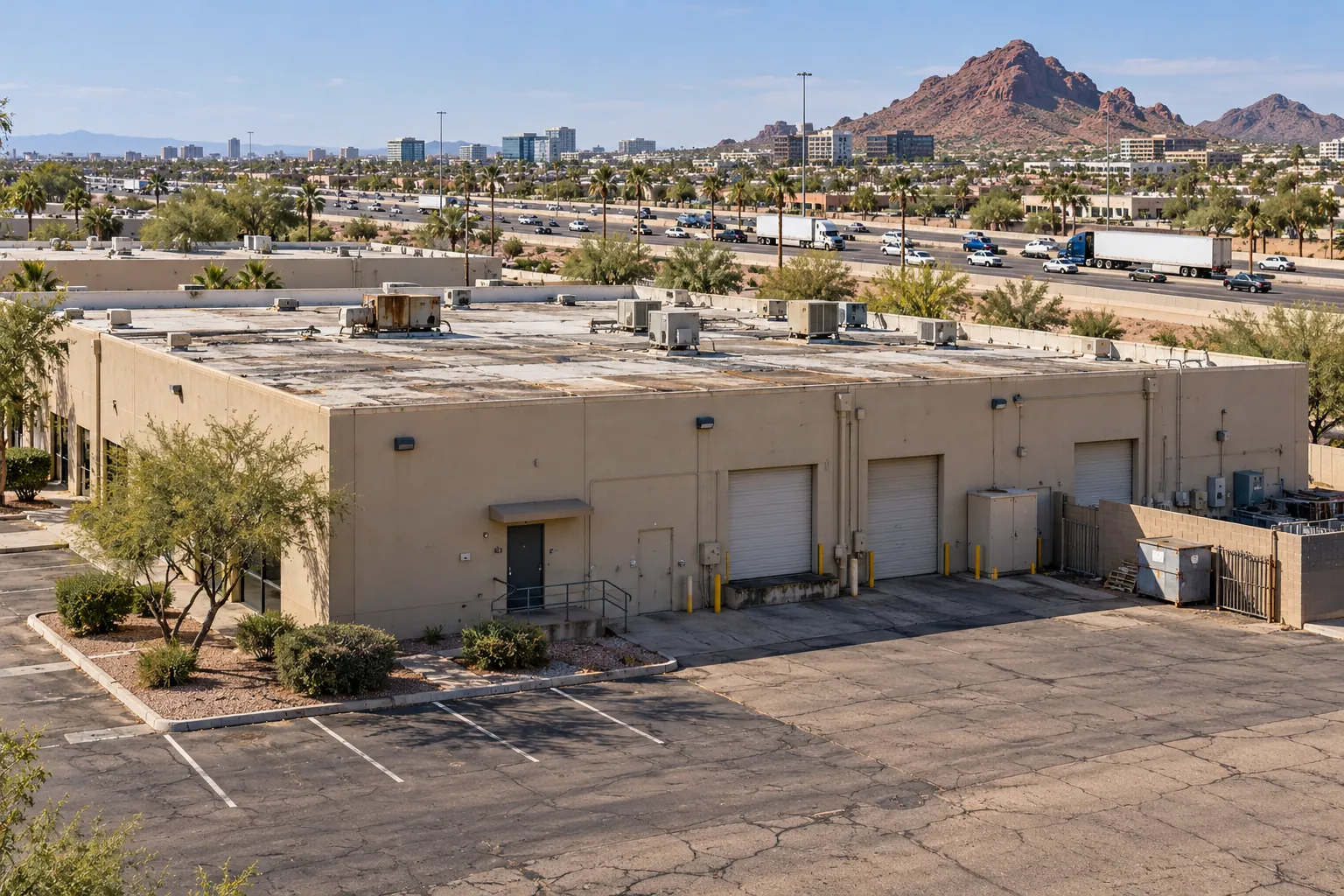
Retail and office centers reached off I-10 change tenants, and each tenant change can add a sign circuit, a new unit, or a vent. Each addition means another hole through the membrane.
Over the years a roof collects conduit runs on loose blocks, pitch pans with shrunken filler, and curbs where a unit was removed but the opening was only covered. Each of those holes gets its own repair.
On a center that has seen several tenants, most leaks trace to something that was added through the roof.
Sun shrinks the filler inside each pan until a ring opens around the pipe. Refilling works once; a pipe boot holds longer where the pipe size allows. Each pan gets checked for leaks on every roof walk, since the filler keeps shrinking.
Storefront sign circuits often come through the parapet or the roof edge in a hole sealed only with caulk that has since cracked. The hole gets a proper sealed fitting at the parapet or roof edge so water stays out of the wall.
When a tenant removes a unit, the curb sometimes stays with a sheet of plywood or metal on top, which leaks at every edge. The curb comes out, the deck opening gets closed with matching deck, and the roof gets patched over it.
Conduit resting on wood blocks or bare membrane rubs through the sheet as it expands. Raised supports on pads stop the wear. Raised supports on protection pads keep the conduit from rubbing the roof as it moves.
A replacement unit set on an old curb can leave gaps where the new base does not match the curb flashing underneath. The fix is new flashing sized to the new unit base, sealed to the existing curb.
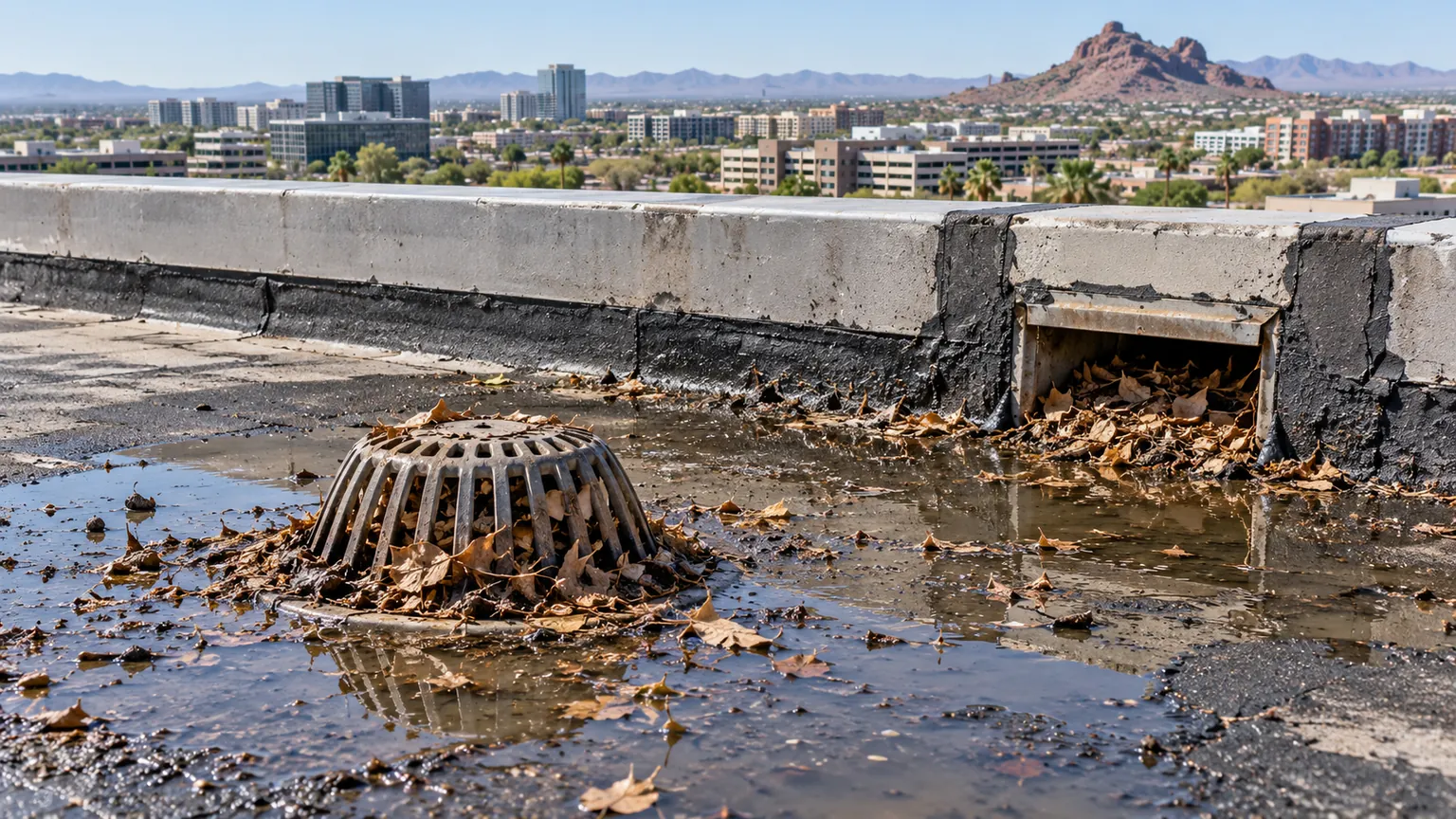
Drains tucked behind units collect debris that service techs push aside, and nobody sees the strainer until water stands. Clearing them belongs on every visit, since water standing behind a unit goes unseen.
In a multi-tenant center, one penetration leak can reach a suite that has nothing to do with the equipment above it.
Penetration work here falls under two services.
Pitch pans, pipe boots, and curb flashing on center roofs are flat roof details, repaired with the sheet already there.
Flat roof repair
When a suite has water and the roof above it has a dozen penetrations, tracing narrows it to the one that leaks.
Leak tracingCall with the suite number, what tenant equipment sits above it, and whether a sign or unit was added recently.
Penetration repairs go faster with a count of every hole before work starts, and the count stays useful after the tenants change again.
Every pipe, conduit, sign circuit, curb, and drain on the roof gets counted and photographed, and abandoned openings get flagged. The count becomes the roof plan you keep for future tenant changes.
On The Roof
Leak spots get tied to the suite below and to the equipment or tenant addition that made the hole. Each leak gets a photo of the hole and the suite it reaches.
PaperworkAffected tenants get notice, and sheeting goes over fixtures and stock in the suites under the work. Tenants away from the work area keep normal use of their suites and the roof stays closed over them.
At The BuildingPitch pans get refilled or replaced with boots, conduit goes onto pads, and abandoned curbs come out with the deck closed and patched. Every penetration gets a fitting that matches the pipe or conduit through it.
On The Roof
Each penetration repair gets a hose test, and you get a marked plan showing every hole and its condition. The plan notes which tenant added each penetration, where known.
On The RoofAhwatukee Foothills sits west of I-10 along Loop 202.
Answers on penetrations, permits, and keeping a center roof in shape.
Twice a year, once in late spring and again in fall, plus a walk after any big storm. On a center roof, each visit should clear drains, check pitch pans that shrink in the heat, and look for damage around units that tenants have serviced.
Photos from every visit make it easier to spot a new penetration or a growing ponding ring before it leaks.
The property manager, with a marked roof plan. Each new sign, unit, or vent added for a tenant gets noted, so leaks can be traced to the right addition.
It wears through the sheet over time. Raised supports on protection pads keep the conduit off the membrane as it expands in the sun.
The City of Phoenix, through Planning and Development, even though the area borders Tempe. Re-roofing and deck work are the jobs most likely to need a permit.
Ask the City of Phoenix, since curb removal often goes with mechanical work. Your HVAC contractor usually handles the mechanical side, and the roof closure follows.
Where the pipe is round and the right size, yes. A boot moves with the pipe on the roof, while pitch pan filler shrinks and needs topping up every few years.
Water runs along the deck before it drips. The hole can sit above one tenant while the stain appears next door, so tracing follows the deck slope.
If it no longer serves anyone, have your HVAC contractor disconnect it and remove it with its curb. The roof then gets the deck opening closed and the membrane patched, which removes a leak point for good.
Tell us which suite has water and what tenants added on the roof. We will count the penetrations and repair the ones that leak.
Want A Call Back About Your Roof?
Leave a name and number, or call (623) 310-0181 now.