Flat Roof Repair
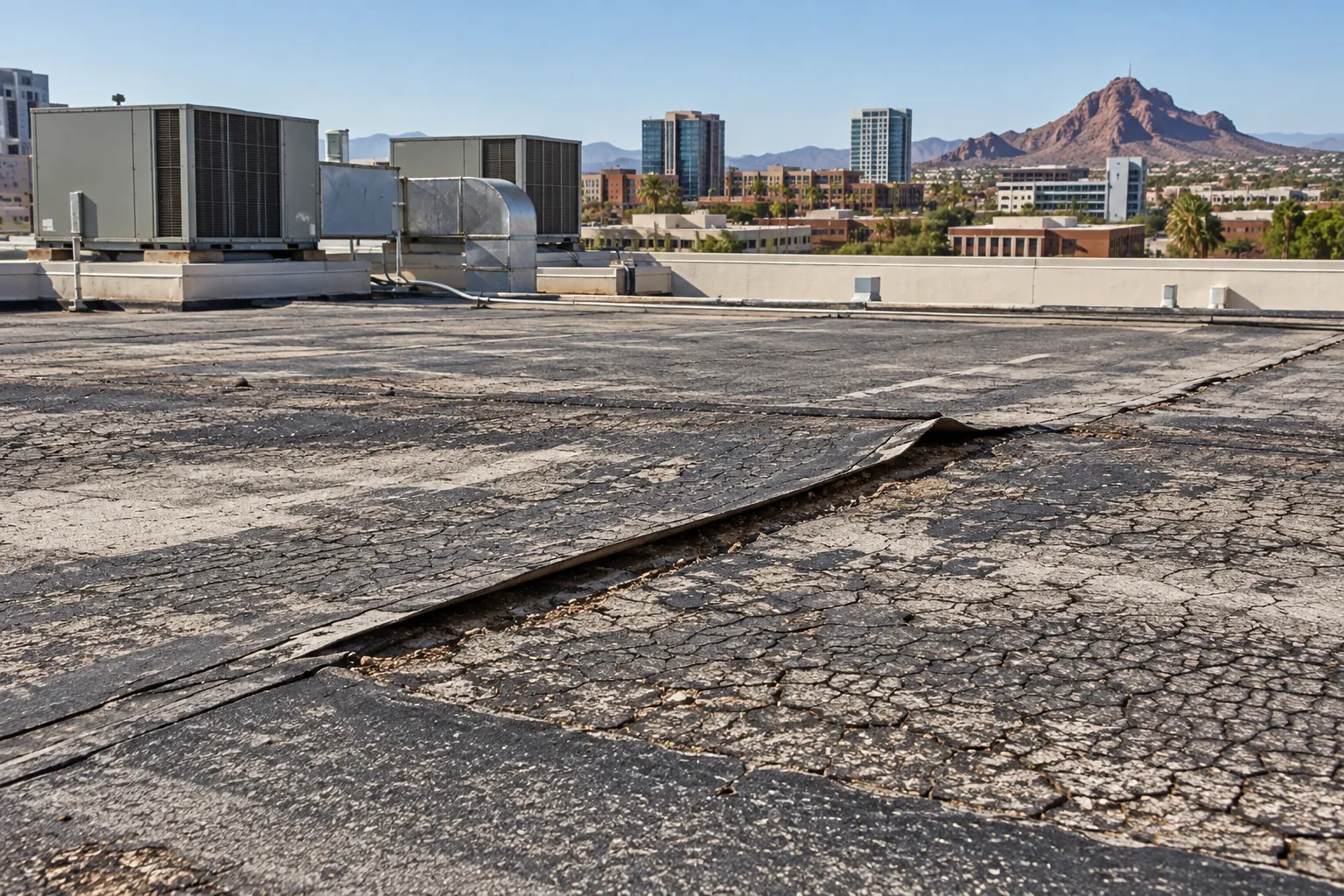
When the trace ends at an open seam, a blister, or parapet flashing, the flat roof repair matches the sheet already there.
Flat roof repair
Trace · Control · Repair
Commercial roof leak repair in Tempe starts inside at the stain and works upslope on the roof until the real entry point shows up, then fixes that spot.
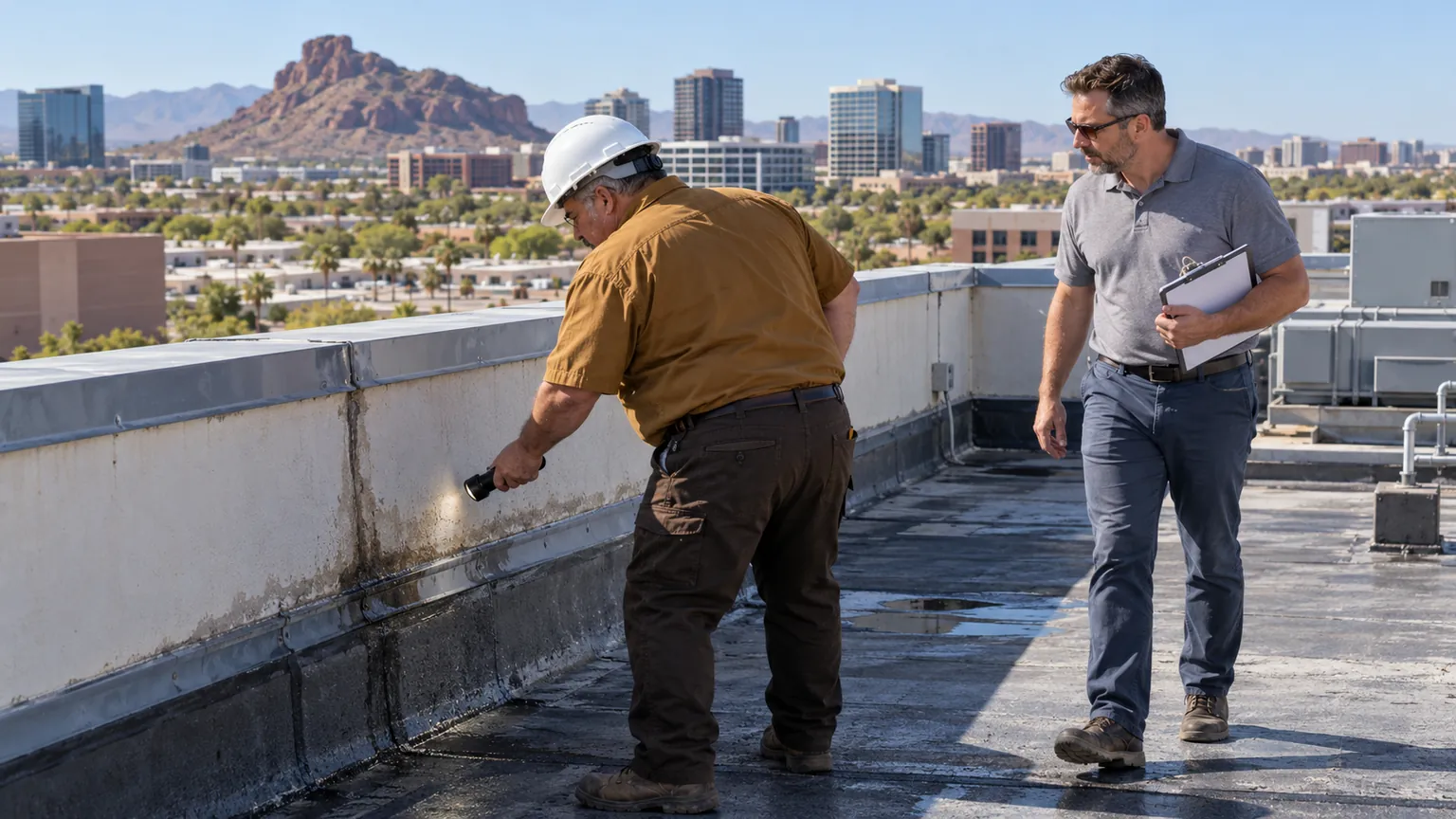
A traced leak with dry surroundings repairs well. Wet insulation across the roof turns a leak call into a bigger decision.
Water enters at one of these spots, then travels along the deck before it drips, which is why tracing works from the stain upslope.
A crack at a rooftop unit curb lets water onto the deck, where it can run several feet along a flute before reaching a seam in the ceiling. Curbs on the high side of the roof get checked even when the stain sits far downslope.
Corrugated deck channels carry water in a straight line, so the stain often sits downslope from the opening in the same direction the flutes run. Matching the flute direction inside with the roof slope outside narrows the search quickly.
Shrunken filler or a split boot lets water straight down the pipe. Drips near a pipe or conduit inside point here first. Pipes that run through a ceiling cavity can carry water along their outside to a distant drip.
Water entering behind wall flashing shows up along exterior walls, sometimes at a window head instead of the ceiling. Wall leaks often start at a cap joint or a scupper corner several feet from the stain.
A loose drain clamp ring or a cracked leader inside the building leaks only when the drain is flowing, which ties drips to rain timing. A drip that stops when the drain is dry points inside the building rather than at the membrane.
Hatches that get opened often lose their curb seal, and the water shows up on the ladder or the wall right under the hatch. Checking the hatch curb takes minutes and rules it in or out early in the trace.
Leak calls move through three stages. Each one has its own work, and the permanent fix comes last.
| Stage | What Happens | What You Get |
|---|---|---|
| Trace | Moisture scan, upslope check of every curb, drain, and penetration, one-area water tests | The confirmed entry point, marked and photographed |
| Control | Clear a blocked drain or scupper, compatible tape on a split seam, a weighted membrane patch | Water held out until the roof is dry |
| Protect | Plastic sheeting over equipment and inventory inside | Less damage while the repair is planned |
| Repair | Wet material cut out, insulation replaced, matching membrane or flashing installed | A permanent fix at the entry point |
| Confirm | Hose test over the repair with someone watching inside | Proof the stain has stopped growing |
Every rain that gets past the opening wets a wider circle of insulation, even after the ceiling stain stops growing.
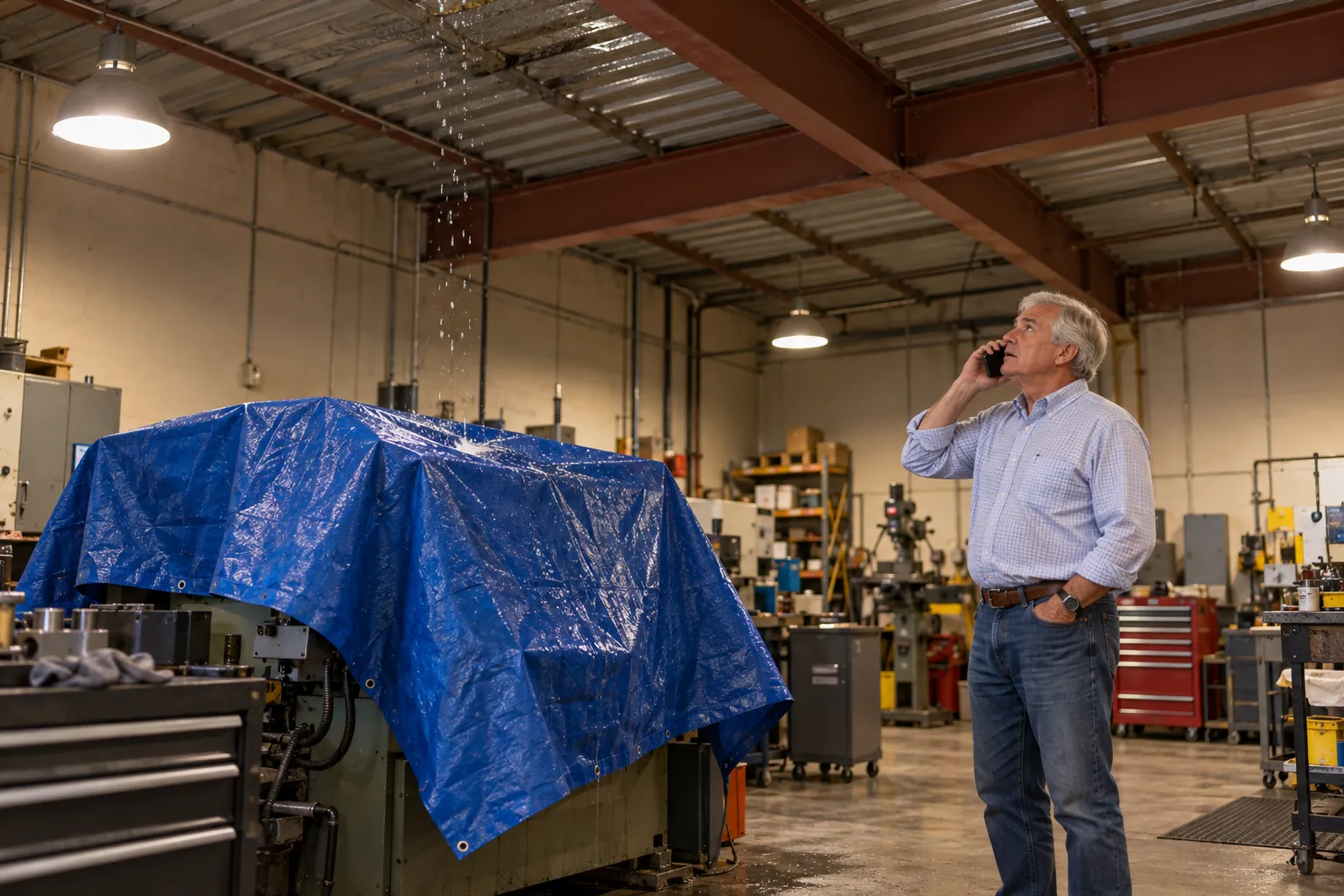
Call with where the stain sits, whether it drips only during rain or also when the AC runs, and what sits on the roof above it.
Leak calls run on five steps, and the first two happen before anyone opens the roof.
Inside, the stain gets measured, photographed, and located against the roof above. Outside, a moisture meter scans the area upslope of it. Dates and rain timing get noted, since they help separate roof leaks from condensation.
At The Building
Every curb, drain, and penetration upslope of the stain gets checked. If the source still hides, one area at a time gets water-tested. Each water test runs long enough for water to travel along the deck.
On The RoofPlastic sheeting goes over equipment and inventory under the drip, and temporary leak control holds water out until the roof dries. The stopgap stays in place until the permanent repair replaces it.
At The BuildingOnce the entry point is confirmed, wet material comes out, insulation gets replaced, and matching membrane or flashing goes on. The permanent repair covers the entry point and the wet material around it.
On The RoofA hose test runs over the repair while someone watches the ceiling inside. The photo set shows the stain, the source, and the fix. If the stain keeps growing after the test, the trace continues upslope.
Paperwork
The entry point decides which repair comes next.
When the trace ends at an open seam, a blister, or parapet flashing, the flat roof repair matches the sheet already there.
Flat roof repair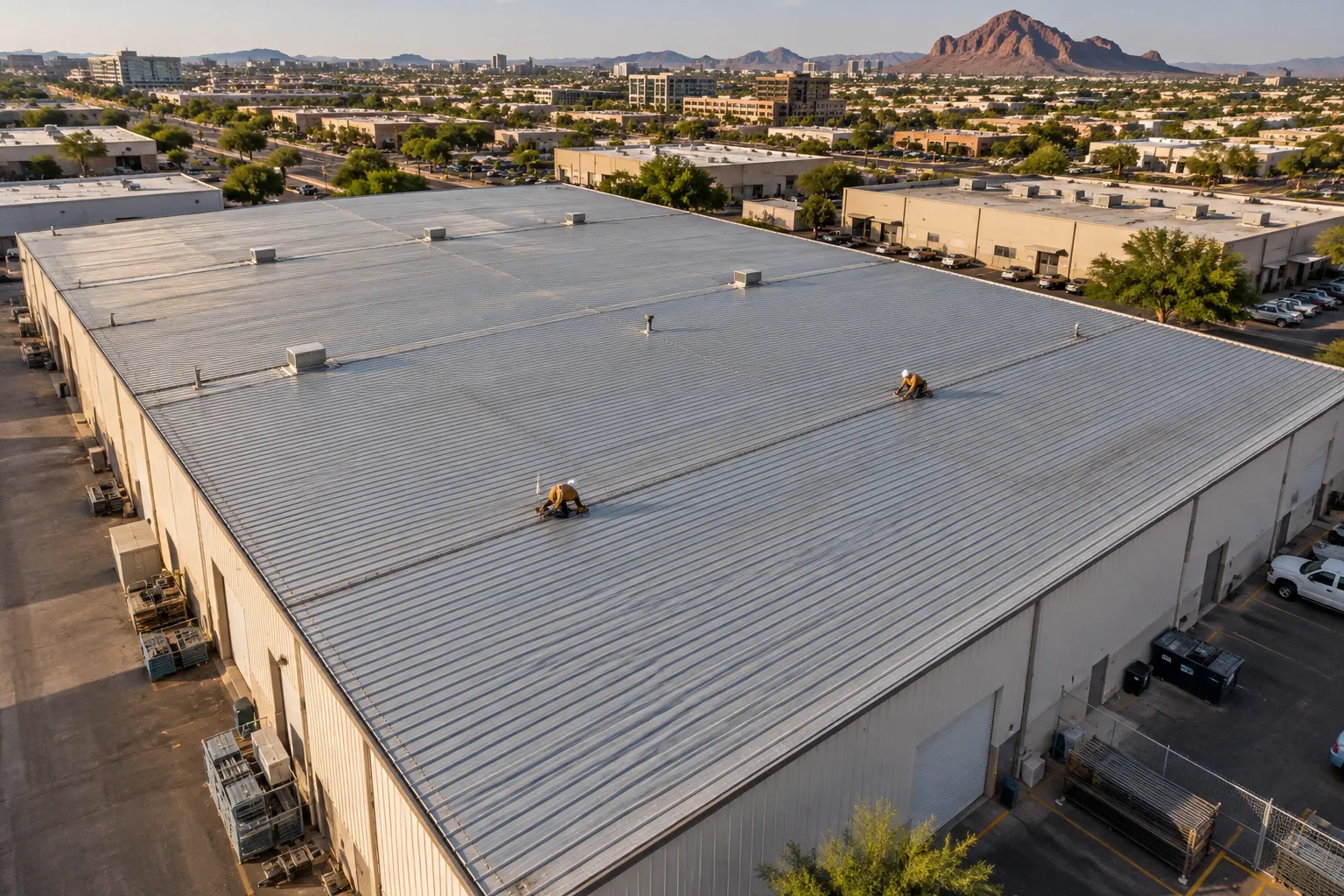
Drips that line up under screw rows or panel ends lead to fastener and lap repairs on the metal roof.
Commercial metal roof repairAnswers about tracing, temporary control, and what to do inside while you wait.
Because the deck carries the water first. Once it gets past a seam or flashing, it runs along deck flutes, insulation joints, or the top of a joist until a gap lets it drop onto the ceiling.
So the trace runs the other way: from the stain toward the high side of the roof, checking each curb, drain, and penetration, scanning for wet insulation, and water-testing one suspect spot at a time.
That points away from the roof membrane. Condensate lines, clogged drain pans, and sweating ducts drip on dry days, so the unit and its curb get checked before any roof repair.
Long enough to get the roof dry and the real repair scheduled. Tape and weighted patches are stopgaps, and wet insulation under them keeps spreading.
Temporary control can go on in light rain, like clearing a drain or taping a split seam. A permanent repair waits for a dry surface, because patches and welds bond only to dry membrane.
Whatever stops water fastest without making the permanent repair harder. That can mean clearing a blocked drain or scupper, compatible tape over a split seam, or a weighted membrane patch over a torn section, with plastic sheeting over equipment inside.
Cover equipment and inventory with plastic, set a bucket under the drip, and photograph the stain with the date. Note when it started, since rain timing helps the trace.
Usually some of it is. Water passes through the insulation on its way down, so the moisture scan maps how far it has spread before the repair is sized.
Send us where the stain sits and when it drips. We will trace it on the roof and fix the entry point.
Want A Call Back About Your Roof?
Leave a name and number, or call (623) 310-0181 now.