Flat Roof Repair
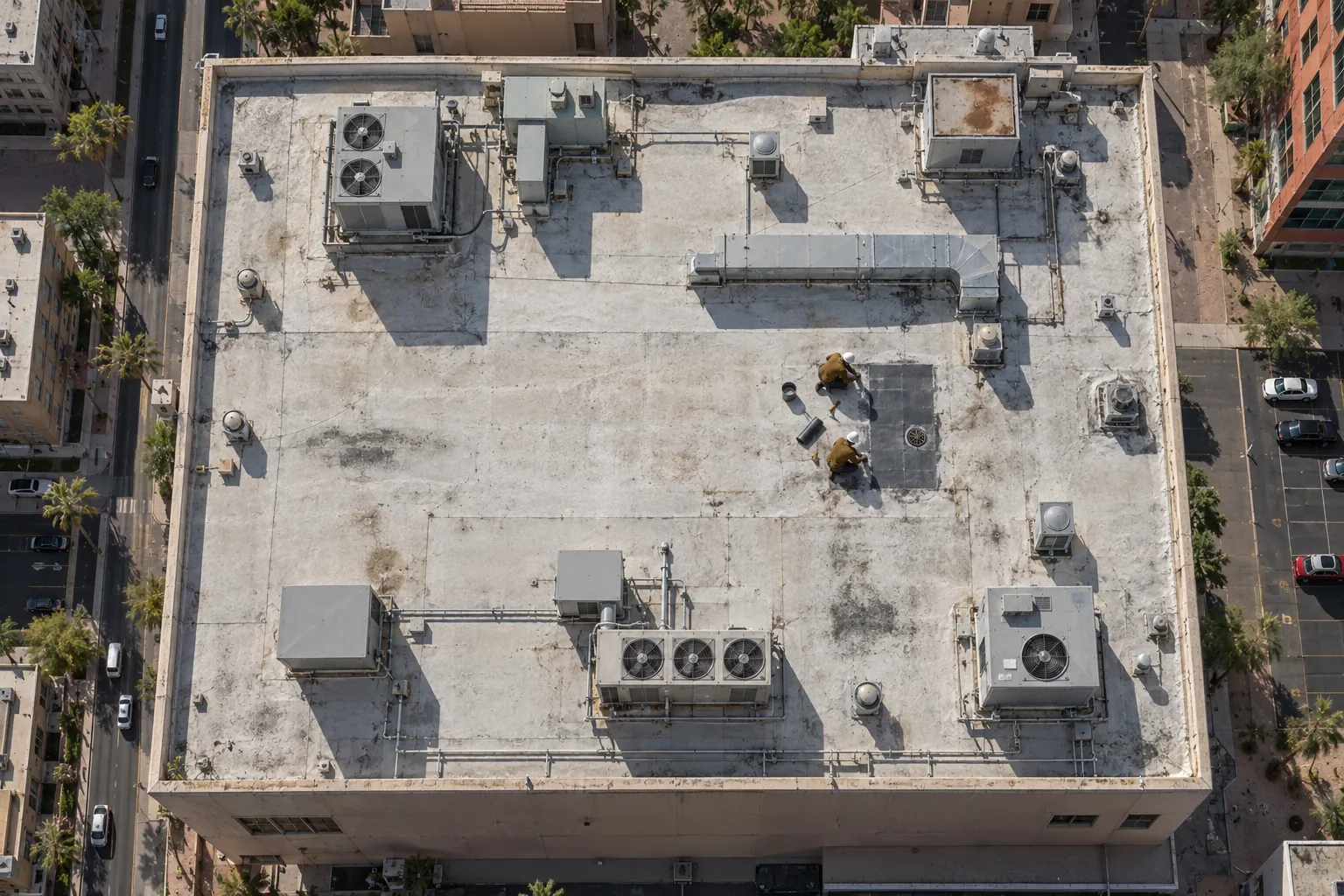
Section repairs on flat roofs replace the wet insulation and membrane in a marked area and tie the new sheet into the old, with every lap probed after.
Flat roof repair
City Of Phoenix
Commercial roof repair in South Mountain gets sized section by section, so you know early whether the work stays a repair or moves into permitted re-roofing.

South Mountain is a Phoenix village, so roof work there follows City of Phoenix permit rules. Re-roofing and deck replacement are the jobs most likely to need a permit.
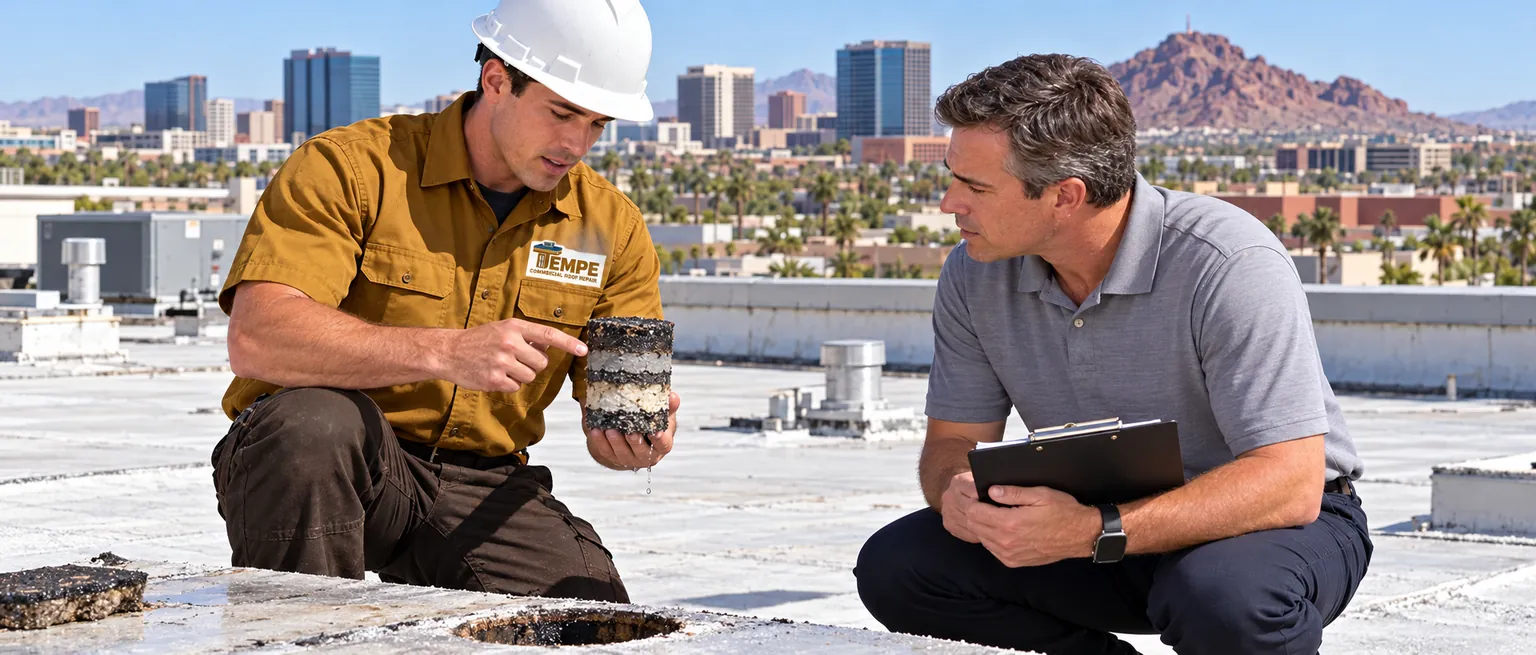
That makes the size of the repair a real decision. A core cut and a moisture scan show how much wet material has to come out, which tells you whether you are fixing a section or starting a re-roof. You get that answer before any price.
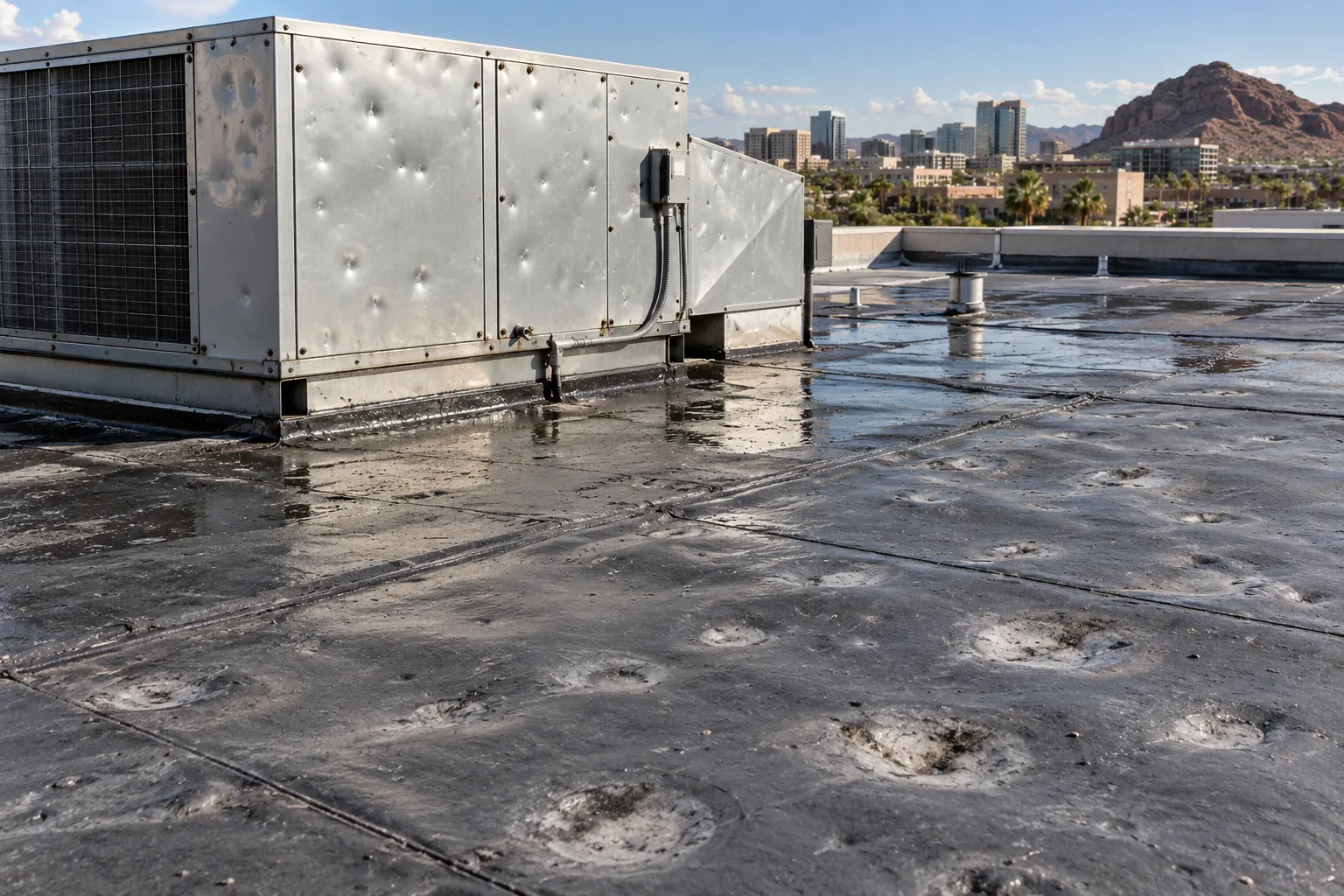
These spots most often turn a small repair into a larger one, so they get checked and measured before the scope and the price are set.
Water that sits around a drain for years soaks the insulation in a widening circle. The core cut shows how far it reaches. A ring that has grown over several seasons tells you the drain or the slope needs attention too.
A spongy feel when you walk means wet insulation or weakened deck. That area moves from patch to section repair. Marking soft areas with paint during the walk keeps them on the plan for the repair crew.
Split seams spread across many laps point to aged sheet, which changes the conversation from repair to replacement. When seams fail in only one area, a section repair can still hold for years.
Leaks behind wall flashing repair well on their own, since they rarely involve the deck or field insulation. Rebuilding the wall flashing and sealing the cap joints usually closes these leaks.
A roof with one or more re-covers on top traps water between layers, and the core cut counts them before anyone prices work. More layers mean more weight on the deck and more places for water to hide.
Catching wet material early keeps the job small enough to stay a section repair under the permit rules Phoenix applies.
Two services cover most South Mountain repair calls.
Section repairs on flat roofs replace the wet insulation and membrane in a marked area and tie the new sheet into the old, with every lap probed after.
Flat roof repair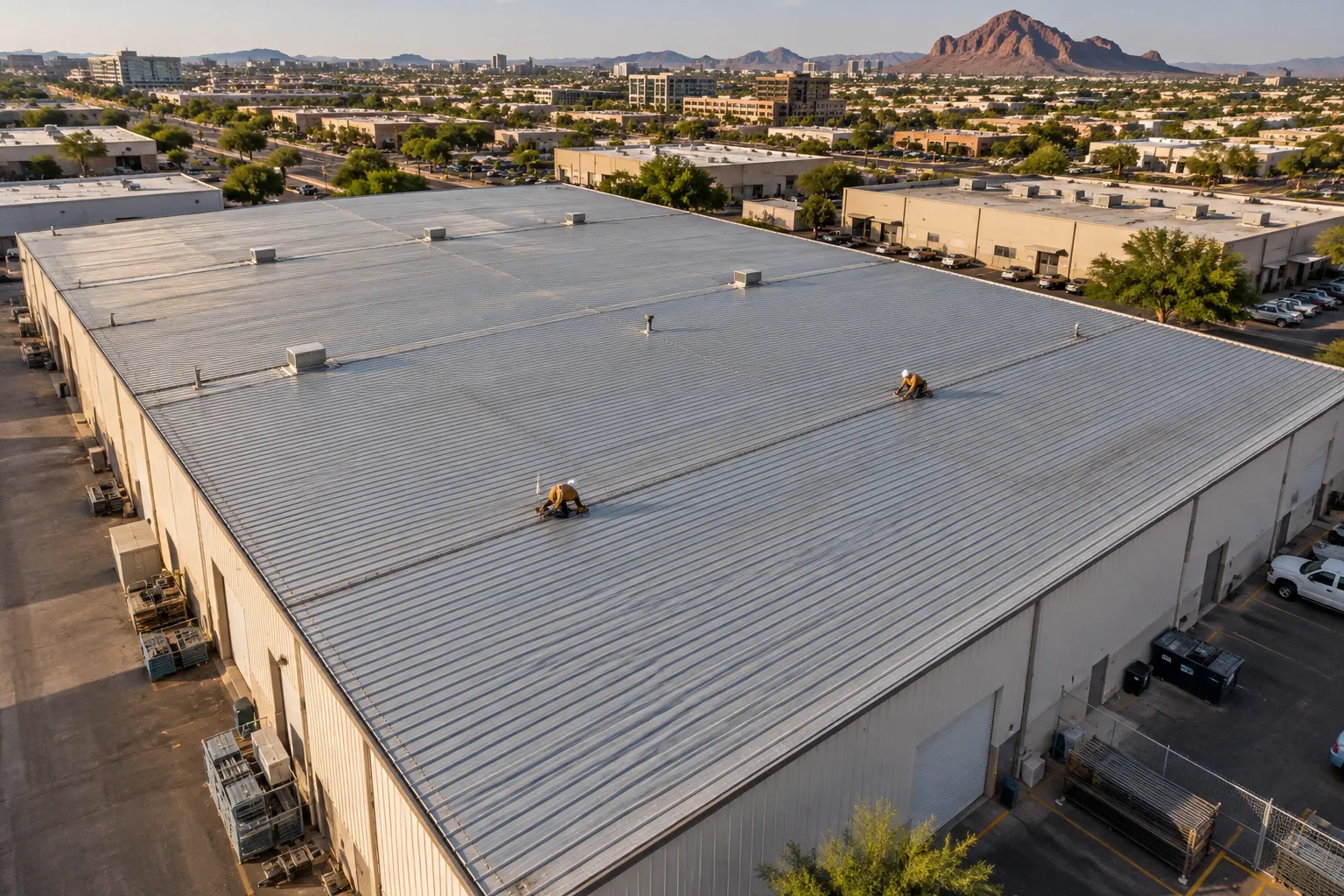
Metal shop roofs get fastener, lap, and panel repairs that rarely touch the structure underneath, which keeps most of that work out of permit territory.
Metal roof repairCall and tell us the roof age, how many leaks you have seen, and whether the roof feels soft anywhere. We will size it on the roof.
Sizing the scope early keeps the permit question from surprising anyone, and it puts real square footage behind the estimate.
A moisture scan covers the whole field, and core cuts at the wettest readings show how many layers sit on the deck and which are wet. Each core cut gets patched watertight right after.
On The Roof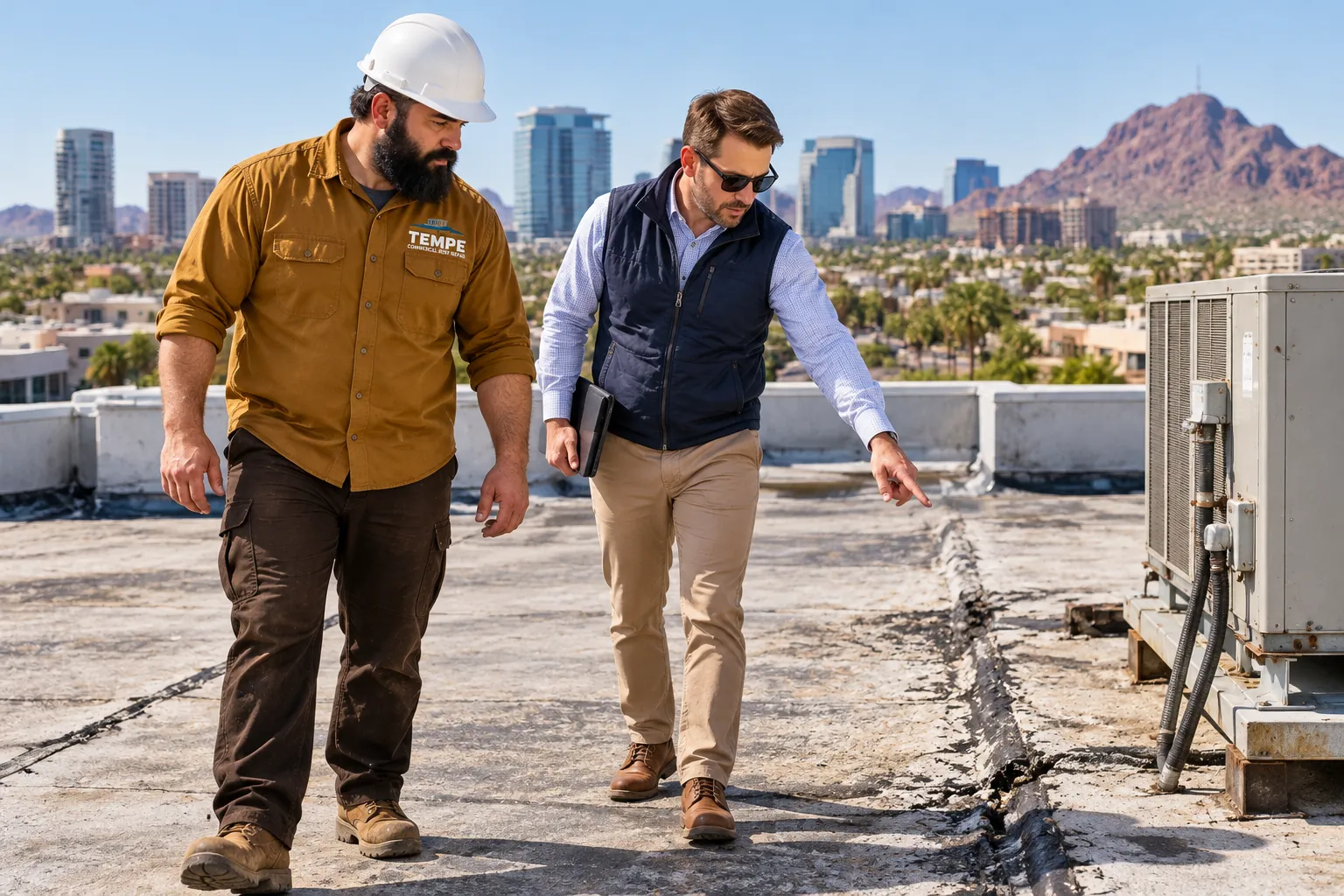
Leak sources and wet sections go on a marked plan with rough square footage for each one. Square footage on the plan helps the permit conversation.
PaperworkIf a section needs opening, sheeting goes over the rooms below, and you confirm with the City of Phoenix whether the scope needs a permit. Rooms under each opened section get covered before the roof is opened.
At The BuildingWet insulation in each marked section comes out, the deck gets checked, and new boards and membrane tie into the existing roof. The new sheet laps onto firm existing membrane on every side.
On The Roof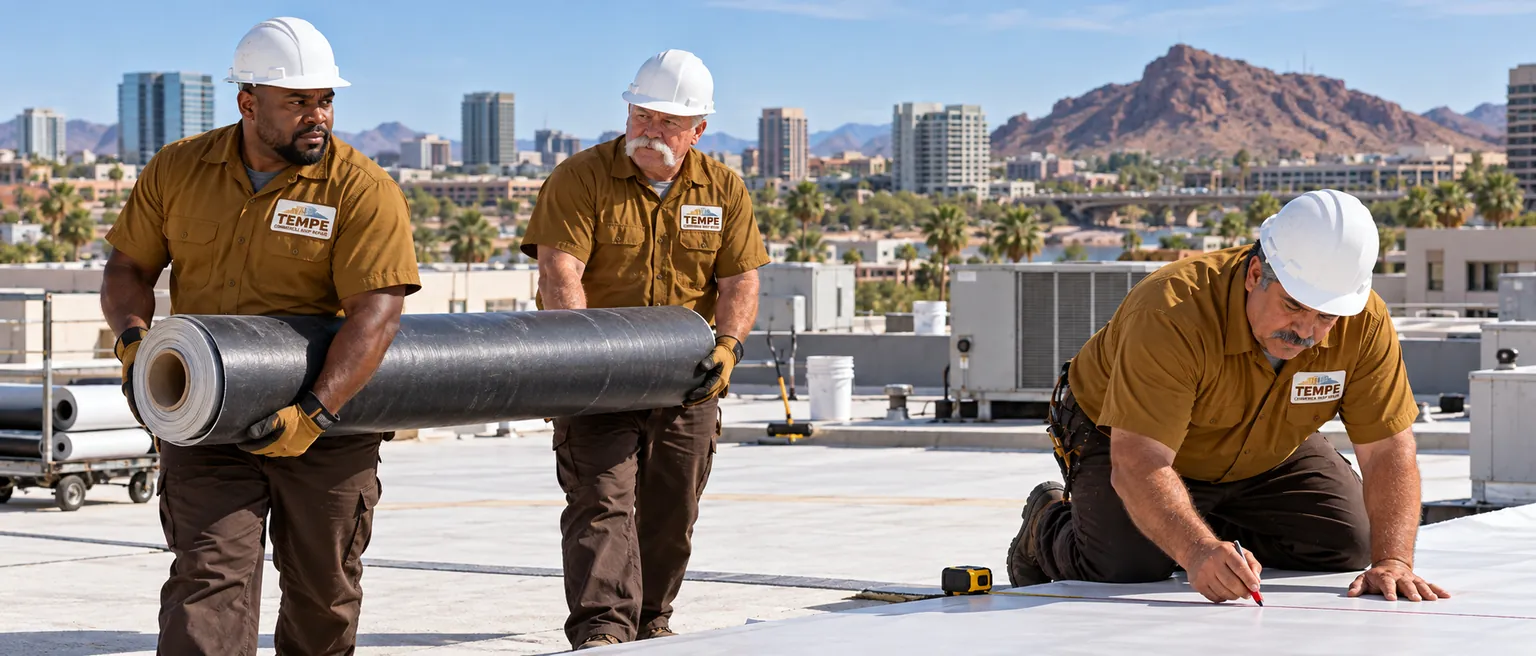
Seams around each section get probed and water-tested. Your plan shows what was repaired and the areas to watch. Areas left for later get noted with the reason.
On The RoofSouth Mountain sits west of I-10, north of South Mountain Park, with Guadalupe and Ahwatukee Foothills close by.
Answers on sizing a repair, permits, and when replacement makes more sense.
When the damage is spread out rather than in one place. If a moisture scan or core cut finds wet insulation across large sections, the deck feels soft near drains, or leaks show up in many unrelated spots, a re-roof starts to make more sense.
One or two traced leaks over dry insulation, with seams that still hold, point to repair.
A small sample cut through the roof down to the deck. It shows how many layers are there and whether they are wet, and the hole gets patched right after.
Yes. A wet section can be cut out and rebuilt while the dry areas get spot repairs, as long as the new sheet ties into the old one properly.
The City of Phoenix, through Planning and Development. Re-roofing and deck replacement are the most likely to need a permit, so ask the city before that work starts.
Ask the city about your specific roof scope. The marked plan with square footage helps that conversation, since it shows exactly what is being opened.
Phoenix Planning and Development sets that, and requirements change, so check with them directly. A marked roof plan, photos, and the square footage of each section from the inspection give them what the scope looks like.
Torn membrane, lifted edges, dented units, and clogged drains from several angles, plus any stains inside with the date. Call your insurer before repairs start.
Temporary control to stop water is usually fine, and you should keep receipts. Check with your insurer before permanent repairs so the damage is documented first.
Tell us the roof age and where you have seen water. We will scan the roof and mark each section that needs work.
Want A Call Back About Your Roof?
Leave a name and number, or call (623) 310-0181 now.