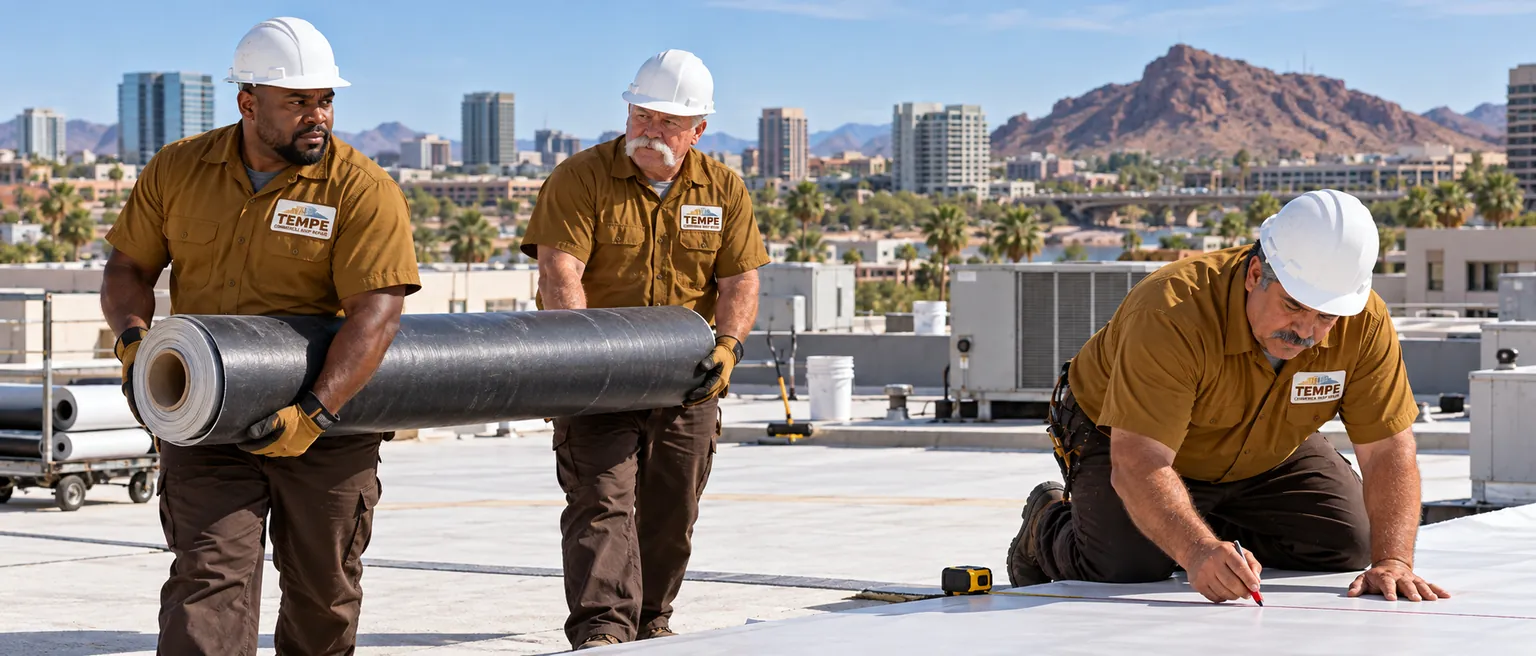
Flat Roof Repair
Curbs, conduit penetrations, and seams on low-slope tech roofs get matched membrane repairs, sized so each one closes before evening.
Flat roof repair
Research And Discovery Hub
Commercial roof repair in the Discovery District keeps the space below dry the whole time: every cut in the membrane gets closed before the crew leaves each evening.
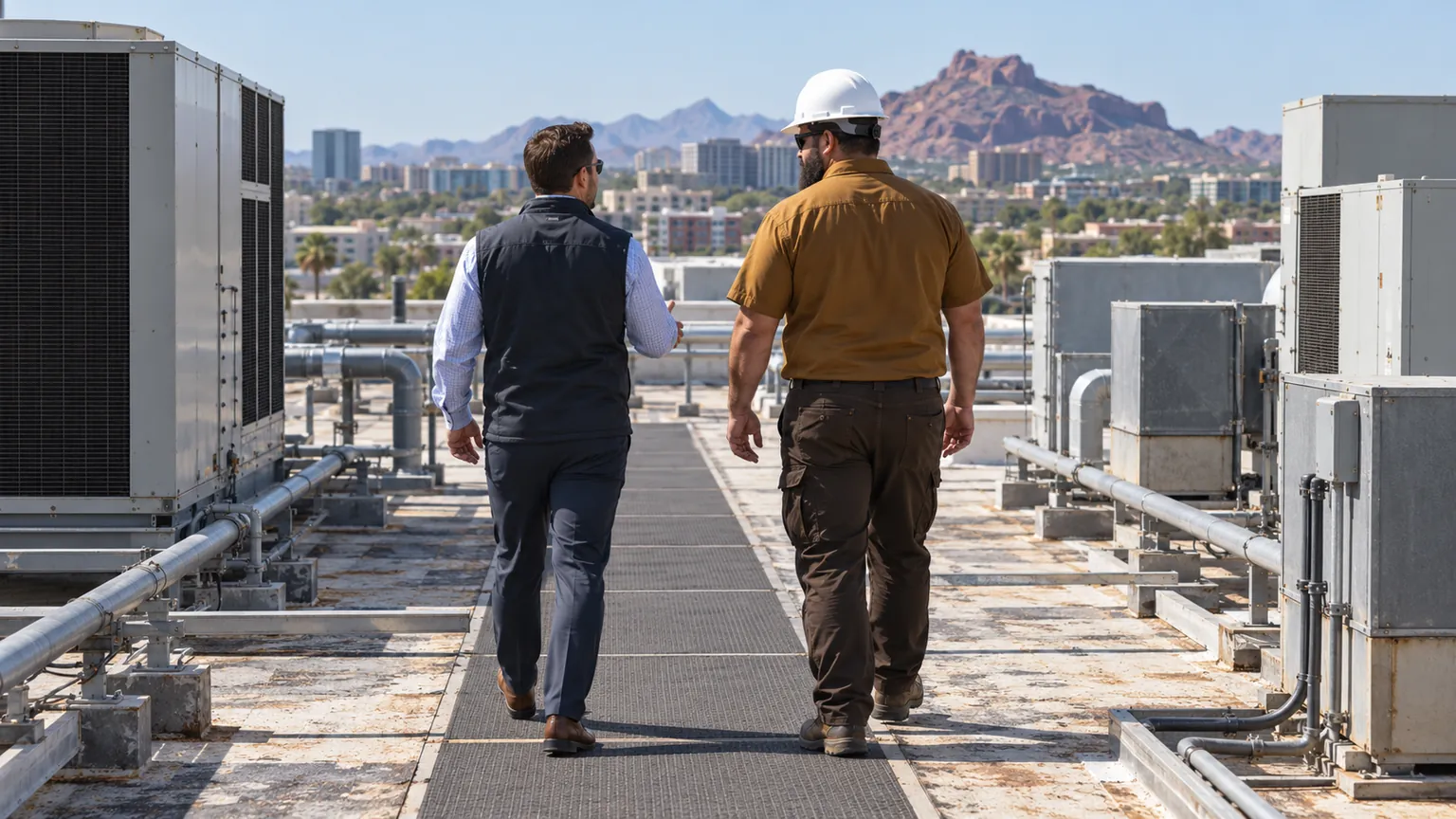
Tempe groups ASU Research Park and Discovery Business Campus into its Research and Discovery hub. Labs, clean rooms, and server spaces there sit under roofs crowded with air handlers, fume exhaust stacks, and conduit.
For those interiors, the repair plan matters as much as the repair. The rule is simple: no section of the roof gets opened unless it can be closed watertight before the crew leaves.
Equipment-heavy roofs over sensitive spaces leak in the same places as other roofs, with more riding on each one, so every point below gets checked on each visit.
Stacks take heat and discharge at once, and their storm collars dry out and pull away from the pipe. New collars and sealed boots keep water off the deck around each stack.
Large air handlers sit on long curbs, and a cracked corner can send water along the deck toward a lab or server room. Corners on long curbs get resealed first, since that is where they crack.
Dense conduit runs across the roof mean many pitch pans and boots, each one a ring that can open as the filler shrinks. Boots replace pans where the pipe allows, and remaining pans get topped up.
Supports set on the membrane wear through it as ducts expand, and the wear hides under the duct where no one looks. Raised supports on pads move the load off the roof membrane.
Drains between equipment rows collect debris pushed aside during service, then water stands around the curbs. Clearing them during each visit keeps water from standing around the curbs.
Daily traffic from techs and contractors scuffs the membrane on the way from the hatch to the equipment. Walkway pads along the busiest paths take that wear instead of the membrane.
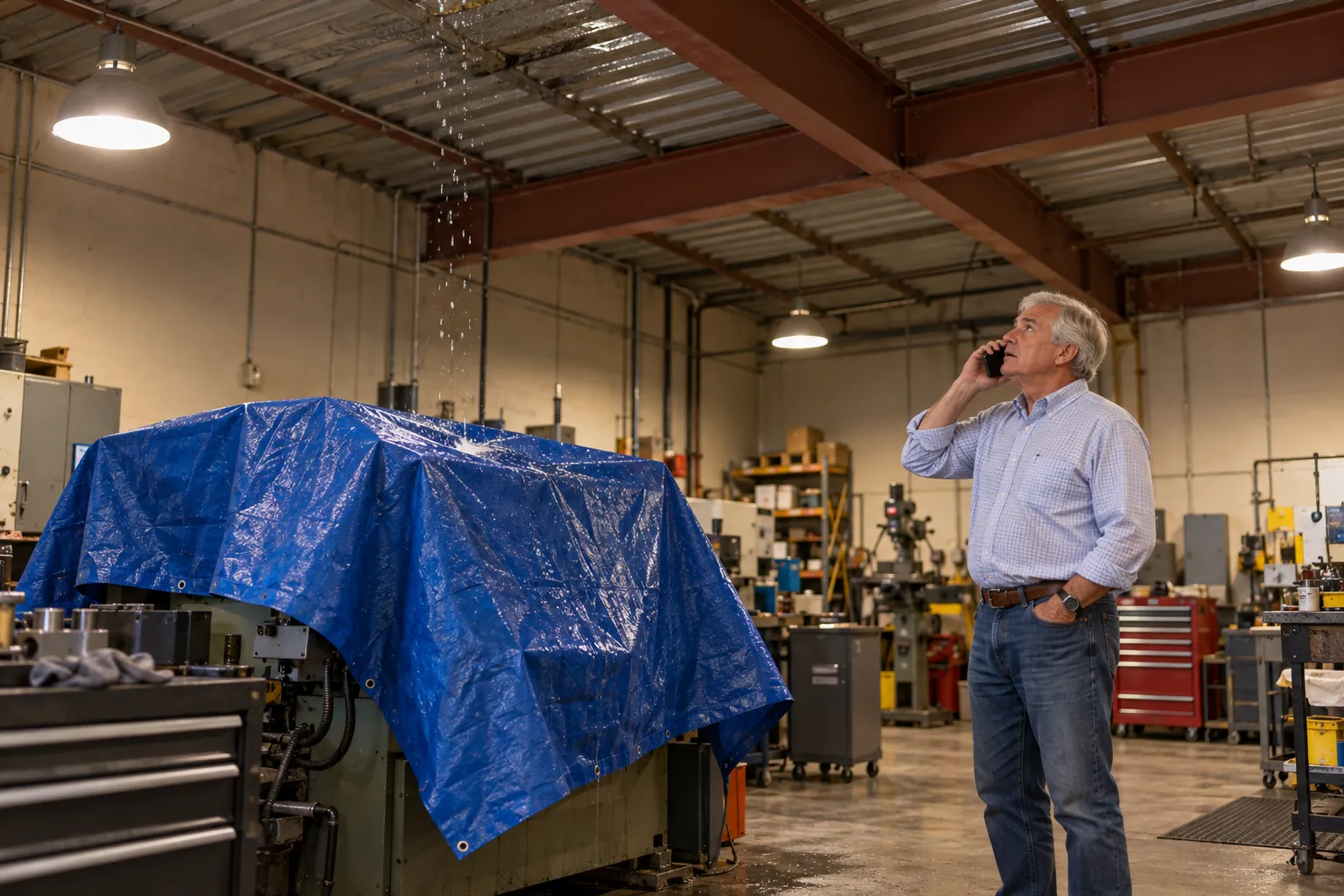
Over a lab or server room, a small leak can cost more in downtime than the repair itself.
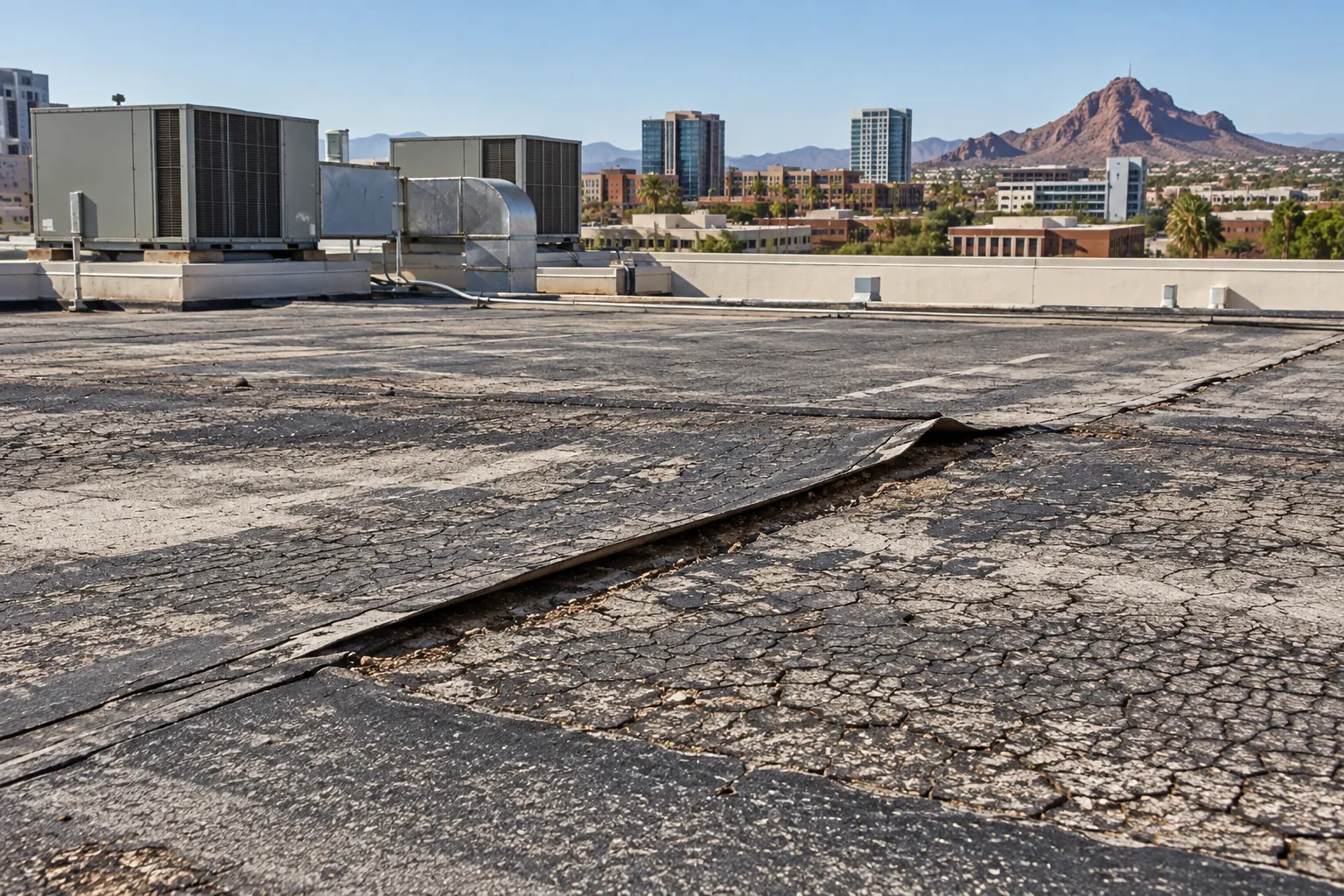
Three services cover most tech and lab building calls.
Curbs, conduit penetrations, and seams on low-slope tech roofs get matched membrane repairs, sized so each one closes before evening.
Flat roof repair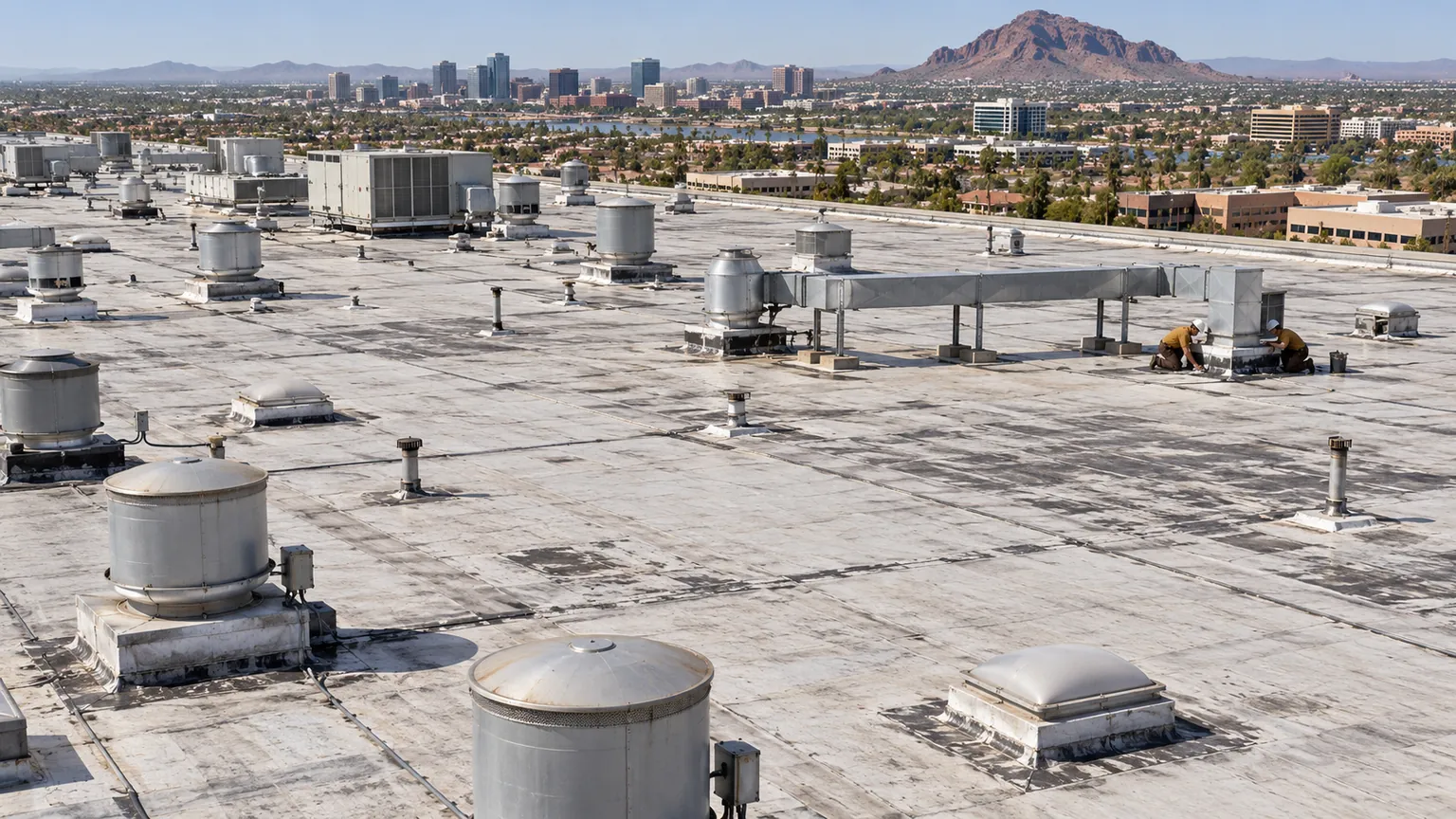
Fume stacks and process exhaust call for compatibility checks on the patch material and hot work coordinated with your facility team.
Industrial roof repair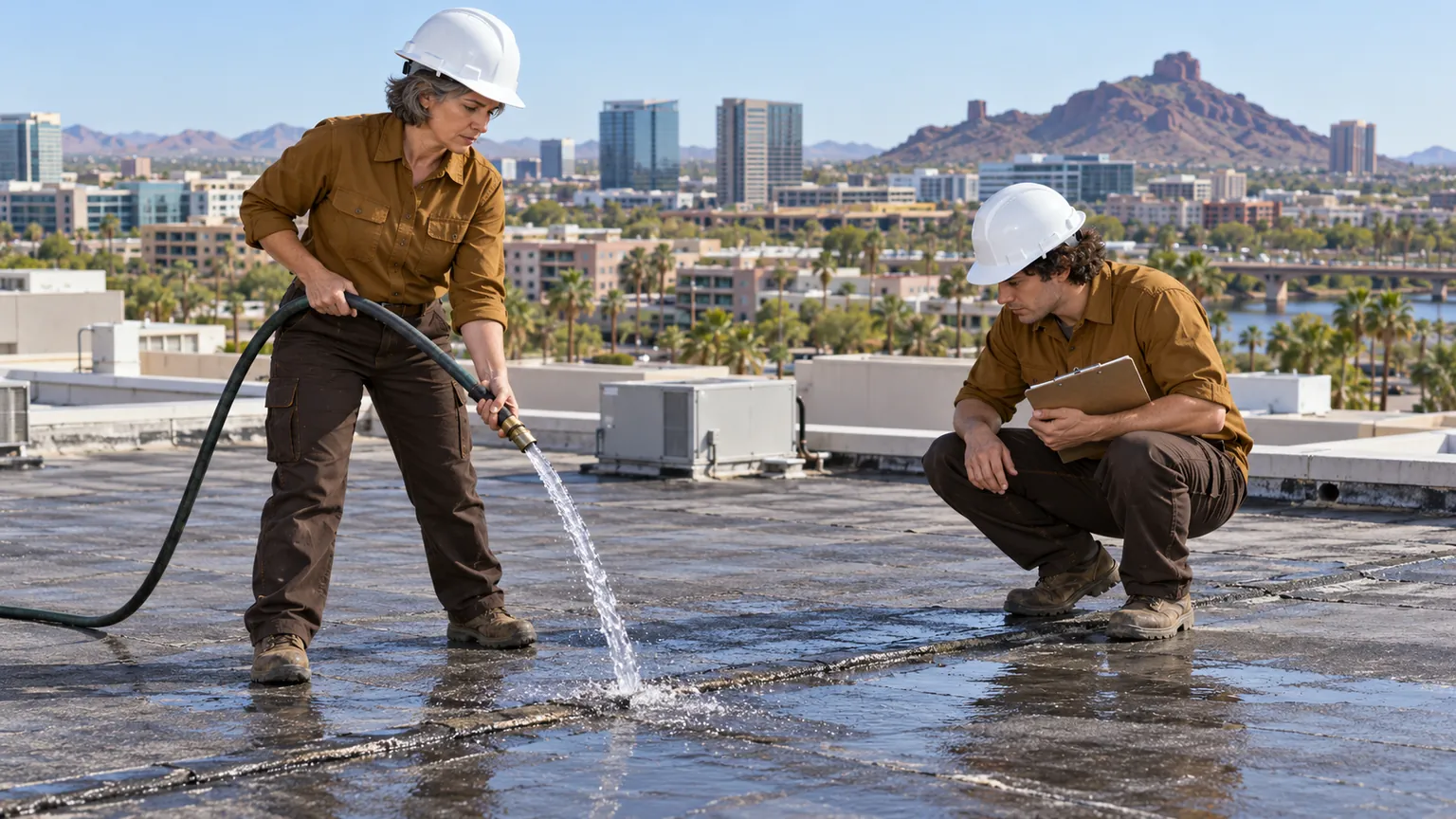
Ceiling drips over sensitive rooms get traced and controlled before any permanent opening is made.
Leak tracingCall with the room, what equipment sits above it, and who on your facility team should get the work schedule.
The plan comes before the cut, the roof is closed every evening, and your facility team knows each day what is opening next.
The roof walk maps every air handler, stack, conduit run, and drain, and notes which intakes sit near each leak point. Each leak point gets numbered on the roof sketch.
On The Roof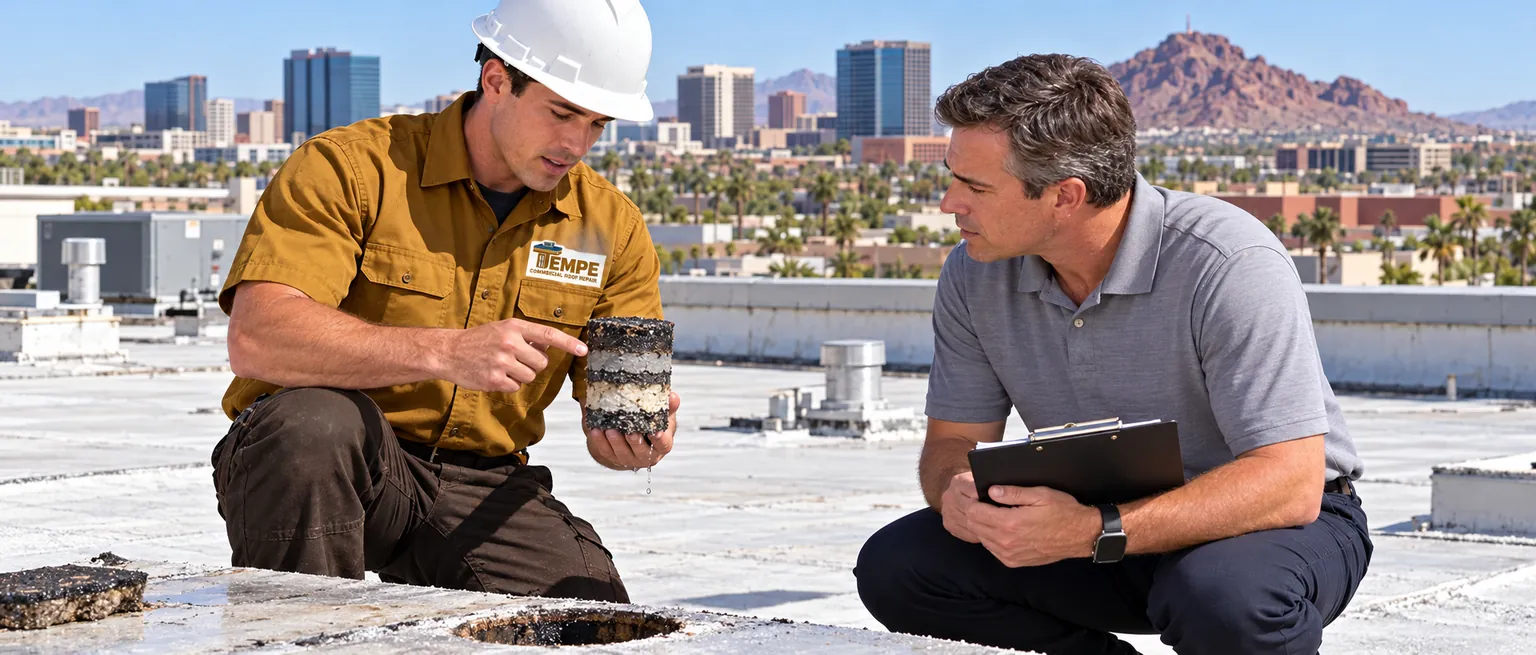
Leaks get tied to the rooms below, and each repair gets sized to what can be opened and closed in one working day. Sections stay small enough to close quickly if weather turns.
PaperworkYour facility team gets the schedule ahead of time, intakes near the work get shielded, and low-odor adhesives get chosen. Intakes stay shielded until the roof work near them ends.
At The Building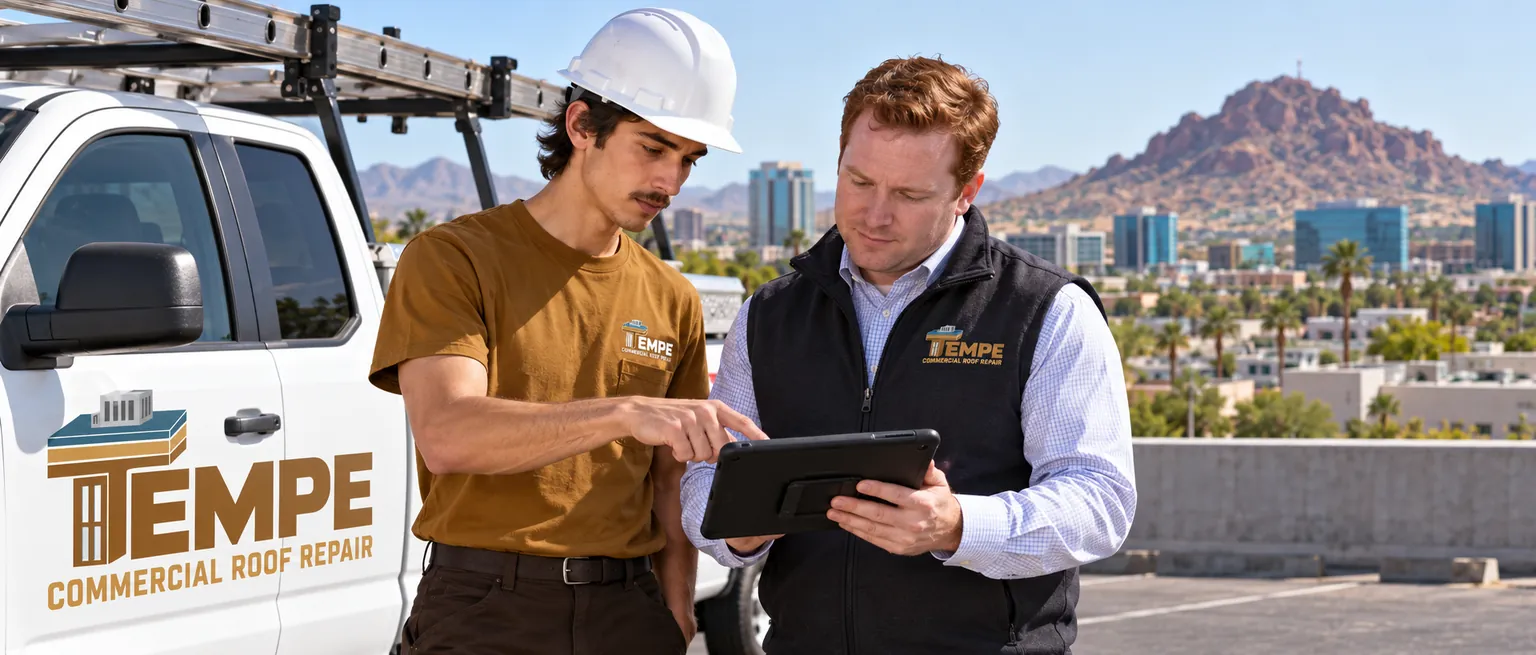
Each section gets opened, repaired, and sealed watertight before the crew leaves, with no cut left open overnight. Seams get probed before the crew packs up each evening.
On The RoofRepairs get a hose test with someone inside watching the rooms below. Photos show each curb, stack, and penetration repaired. Photos include the shields and coverings used near intakes.
On The RoofThe Discovery District sits in south Tempe, near Loop 101, south of US 60 and east of the other areas.
Answers on working over labs, intakes, and sensitive interiors.
Yes, when the planning happens before anyone opens the roof. The crew maps which air intakes sit near the repair, shields them from dust and odor, and picks low-odor adhesives.
Every cut gets closed before the crew leaves for the day, and your facility team gets the schedule in advance so labs and server rooms can plan around it.
Sections stay small enough to close quickly. If rain threatens, the crew seals what is open and waits for the roof to dry before the next section.
Often, when your facility team prefers it. Some labs want roof work during low-occupancy hours, and the schedule gets set with them.
Low-odor adhesives near intakes, shields over the closest intakes, and coordination with your facility team on when air handlers can be adjusted.
Only the ones whose curbs are being worked on, and only for that window. Your facility or HVAC team handles lockout.
The City of Tempe, through Building Safety. Re-roofing and deck replacement are the jobs most likely to need a permit.
Anyone under the work area or near an intake being shielded should hear first. Your facility team decides who gets notice and when.
Many can, when temporary control holds the water out. Your facility team picks the window, and the roof gets the stopgap until then.
Tell us which rooms sit under the leak and who runs your facility schedule. We will plan the repair around them.
Want A Call Back About Your Roof?
Leave a name and number, or call (623) 310-0181 now.