Industrial Roof Repair
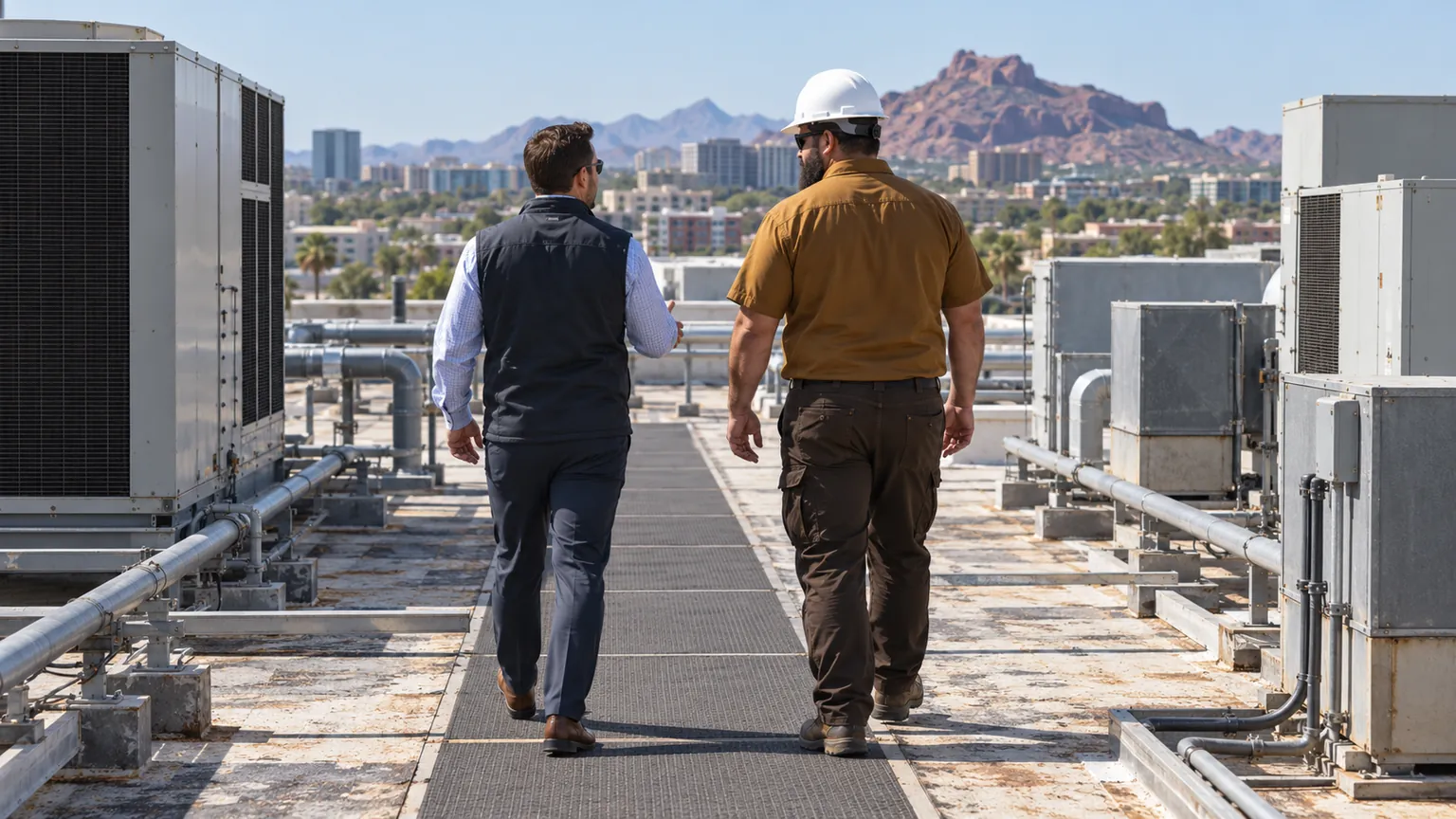
Metal plant buildings carry exhaust fans and vents on their panels, so the curb work and production schedule get planned together.
Industrial roof repair
Fasteners · Laps · Rust · Skylights
Commercial metal roof repair in Tempe starts at the fasteners, laps, and skylight panels, where daily heat swings work screws loose and bake the washers.
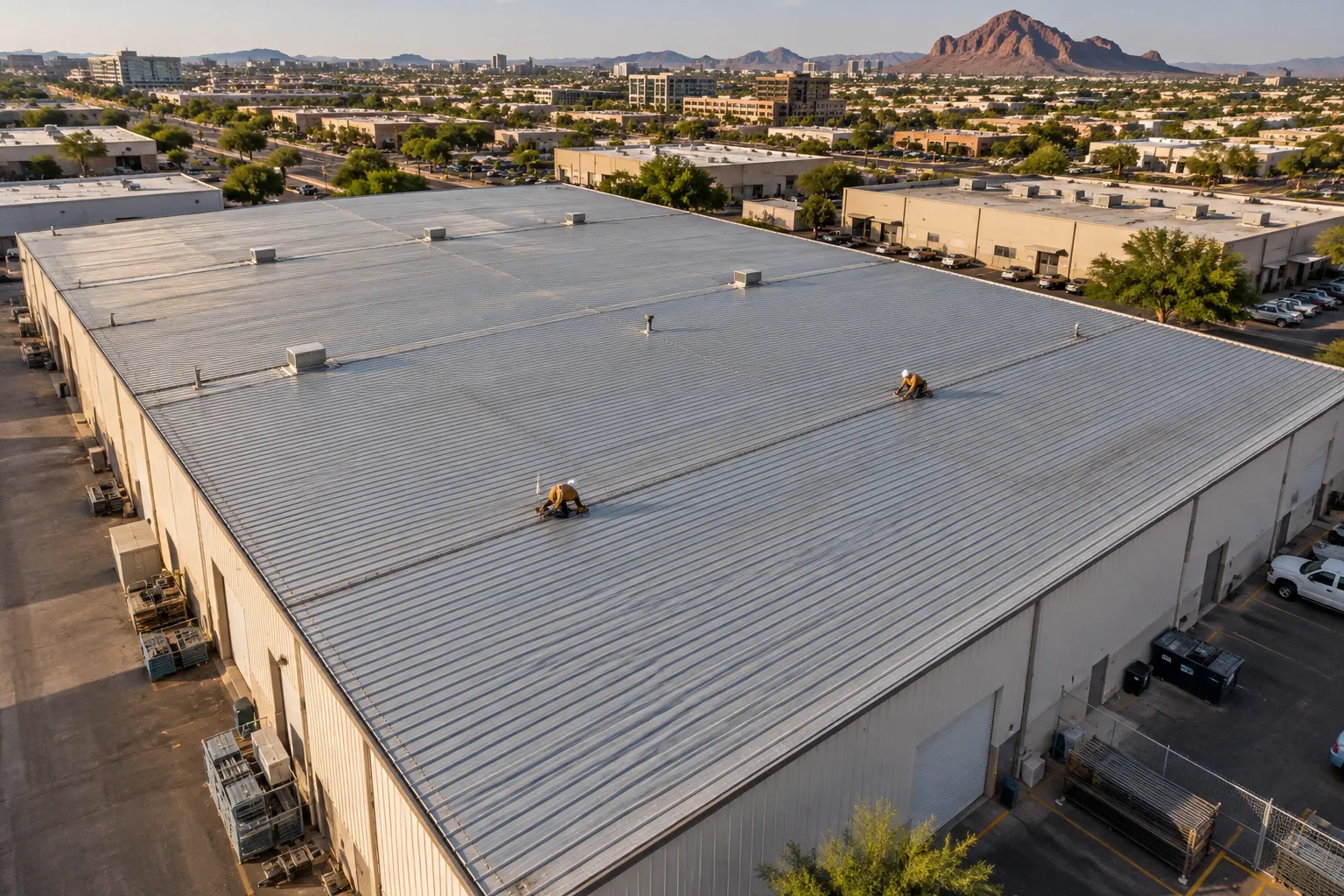
Metal roofs hold up for a long time when their fasteners and laps get attention. Rust through the panel itself changes the answer.
Metal roofs leak at a predictable set of spots, and nearly all of them come back to how the panels move in the heat.
Expansion and contraction loosen screws a little each day until they lift off the panel. Oversized fasteners with new washers bite into fresh metal. On a long panel run, the screws at the ends and over the purlins loosen first.
Sun hardens the neoprene under each screw head until it cracks and stops sealing. Replacing the screw and washer together fixes it. Washers that look fine from above can still be split underneath, so a few get pulled and checked.
At the overlap where one panel ends and the next begins, old sealant shrinks and lets water wick uphill. Butyl tape and new stitch screws close it. Lap leaks often show up inside along the panel end, a few feet downslope of the overlap.
Lapped ribs separate when stitch screws loosen. Water driven sideways in monsoon wind finds the gap and runs along the purlin. Side laps on the windward side of the roof get checked first after a monsoon storm.
Fiberglass skylights crack and yellow with age, and their perimeter fasteners loosen first. Matching panels swap in on the same rib profile. Perimeter screws on each skylight get replaced along with any cracked panel.
Rooftop unit curbs and pipe flashings on metal roofs need flexible boots and closures that move with the panels instead of fighting them. Pipe and vent flashings get new sealant at the base and new washers on their screws.
Most metal roof repairs fall into five kinds of work, all done with parts matched to the existing panel profile.
| Problem | What You Notice | Repair We Make |
|---|---|---|
| Loose fasteners | Drips along a straight line of screws | Oversized fasteners with new washers |
| Open laps | Stains near panel ends or between ribs | Butyl tape at the lap and new stitch screws |
| Rust bloom | Orange streaks around screws and laps | Wire-brush, prime, and coat the spot |
| Failed skylights | Cracked or yellowed panels, light drips | Swap in matching skylight panels |
| Leaking penetrations | Water at pipes, vents, or unit curbs | New flexible boots and sealed closures |
A loose screw lets in a little water at a time, and that water rusts the panel and the purlin from the inside.
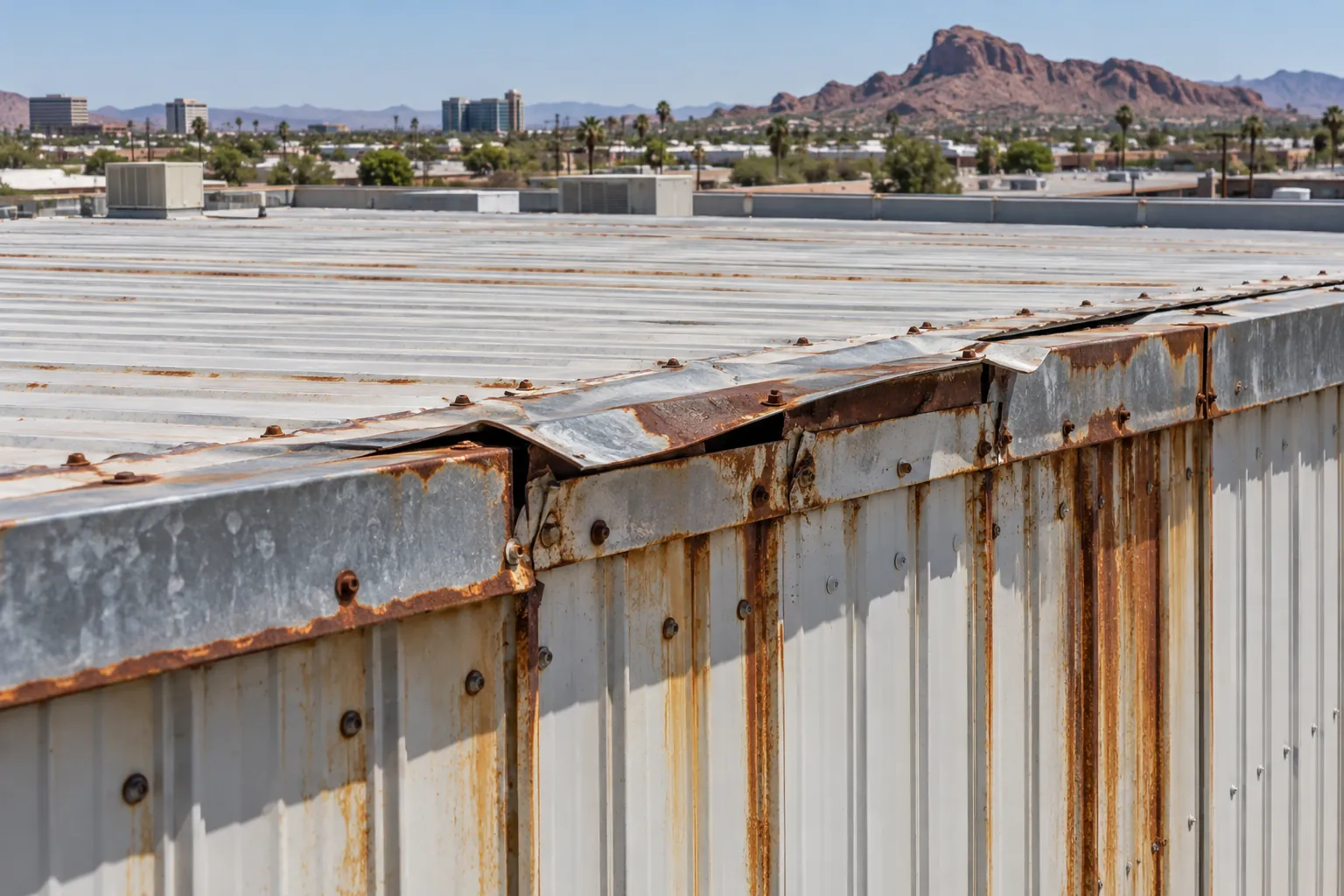
That pattern usually points to fasteners or a lap. Call and tell us whether the drips follow a panel run or sit under a skylight.
Five steps for a panel roof, ending with photos of every fastener run and lap that was repaired.
The crew walks the panel runs on the purlin lines, checking screw heads, washers, laps, skylights, and every curb or pipe. Screw heads that spin in place get flagged for oversized replacements.
On The Roof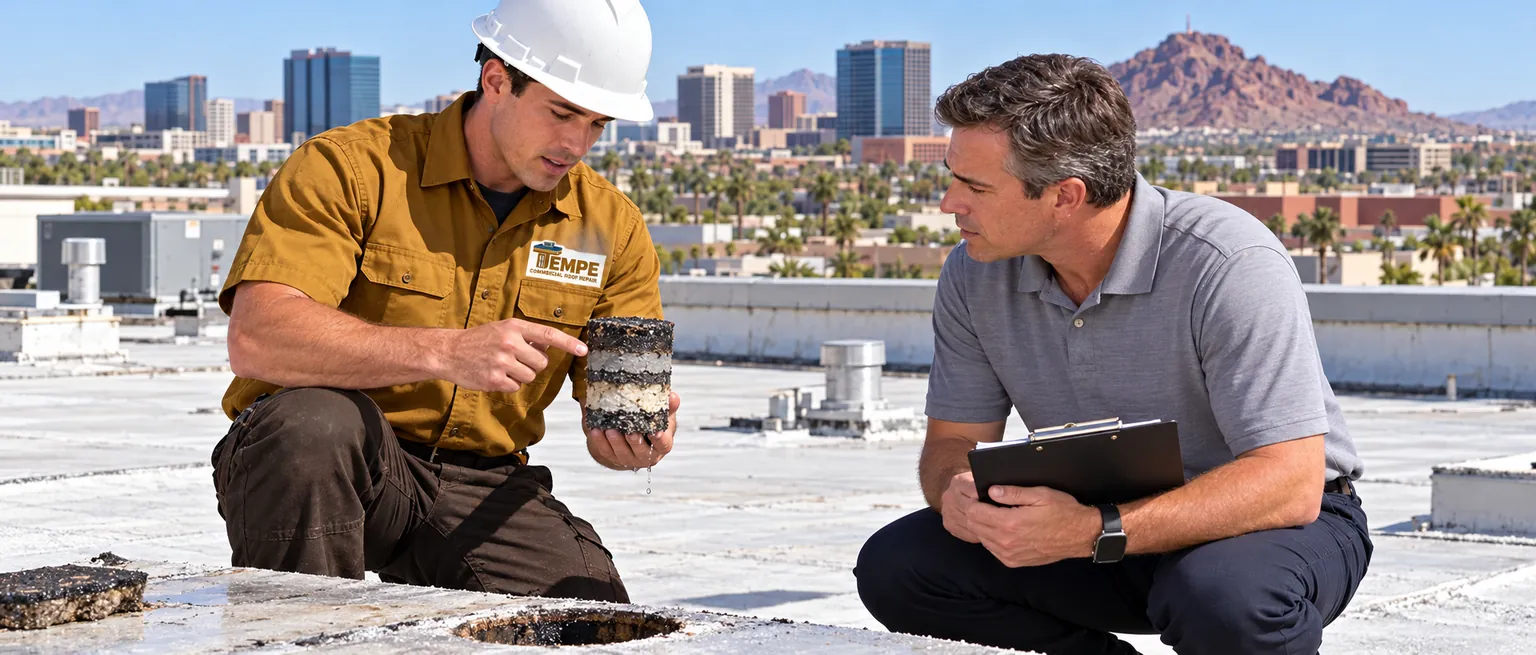
Loose screws, open laps, and rust spots get chalked and photographed, and stains inside the building get matched to the panel above them. Photos pair each inside stain with the panel above it.
On The RoofShop floors get a walk-through first, so stock and machines under the work area can be covered or moved before screws come out. Panels over racking get marked so nothing drops through to the floor below.
At The Building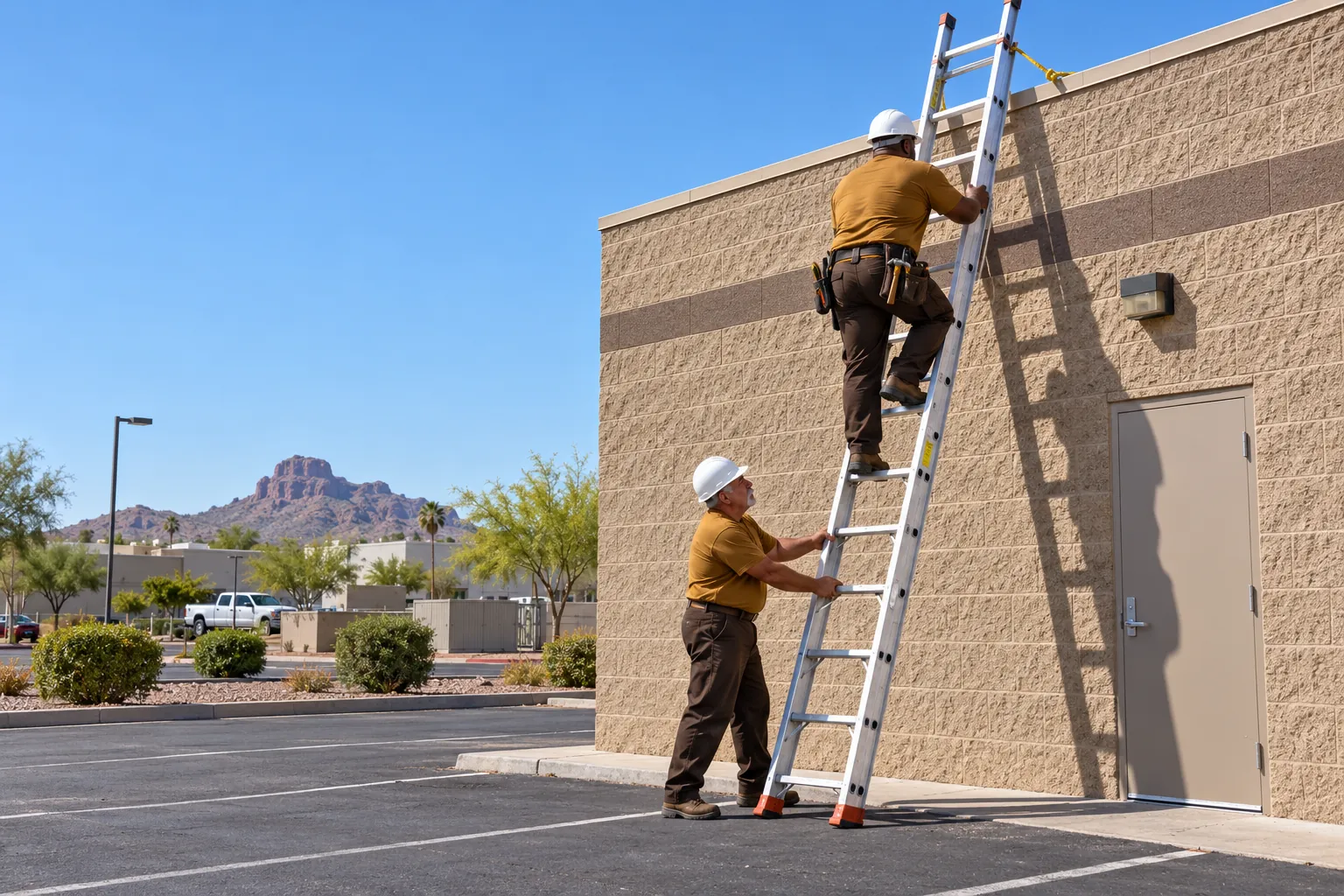
Old screws come out and oversized fasteners with new washers go in. Laps get butyl tape and stitch screws, and rust spots get brushed, primed, and coated. Matching closures go back in at panel ends and ridge caps.
On The RoofA hose runs over repaired laps while someone watches from inside. You get photos of each fastener run and lap that was repaired. Loose screws missed on the first pass get caught during the hose test.
PaperworkTwo other services often come up during a metal roof repair.
Metal plant buildings carry exhaust fans and vents on their panels, so the curb work and production schedule get planned together.
Industrial roof repair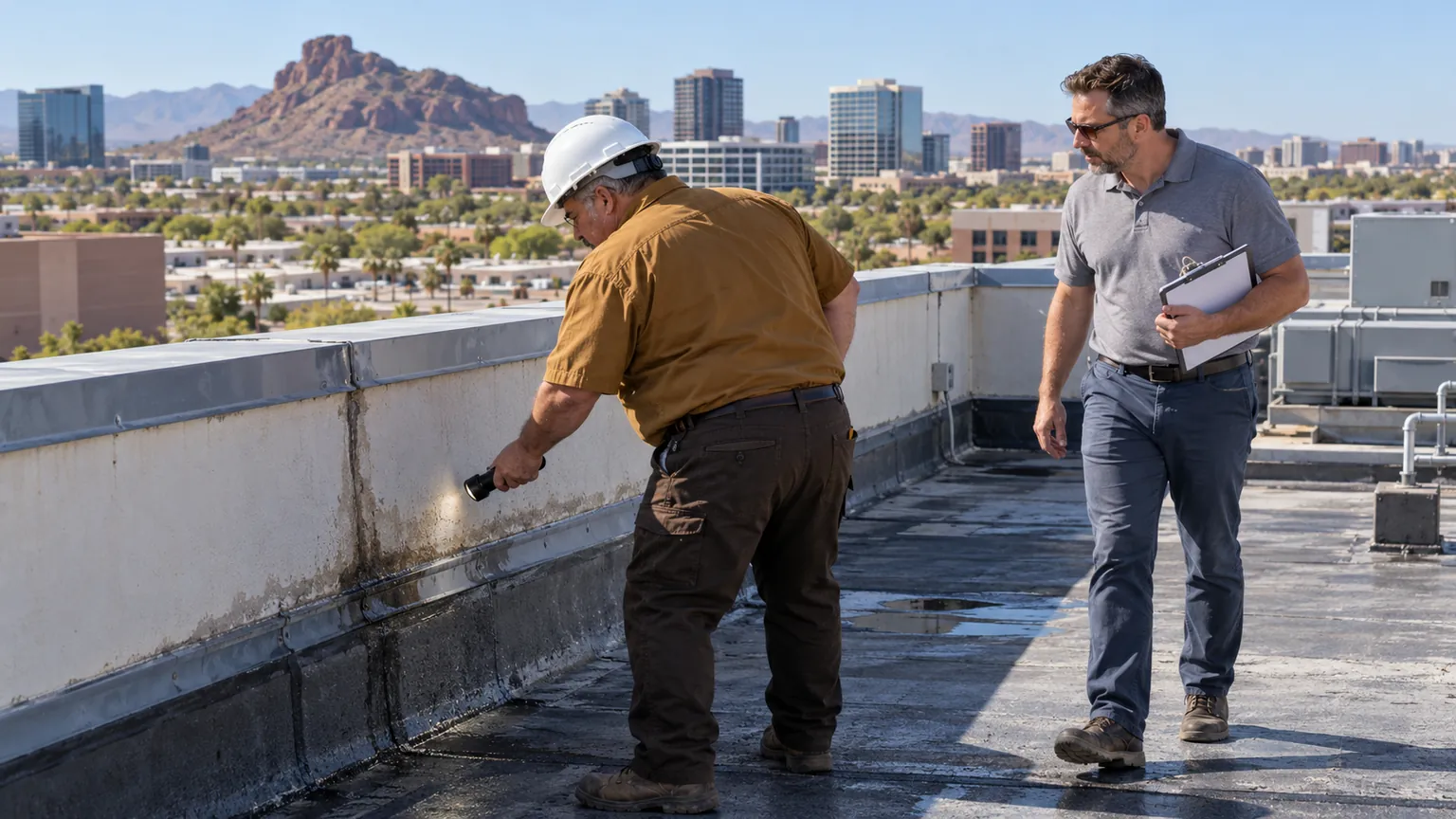
When the drip inside sits far from any loose screw, leak tracing finds which lap or penetration lets the water in.
Commercial roof leak repairAnswers about fasteners, rust, skylights, and how long a metal roof repair holds.
We go to the screws, laps, and skylights first. Hot afternoons and cooler nights work screws loose and harden their washers, so the fix is usually oversized fasteners with fresh washers.
Open side and end laps get butyl tape, rust spots get wire-brushed and primed before coating, and cracked or yellowed skylight panels get swapped for matching ones.
An old hole has been worked wider by years of movement. A larger-diameter fastener bites into fresh metal around the hole and holds the panel tight again.
Once it has eaten through the panel. Surface rust brushes off to firm metal and takes primer and coating, while a panel with holes in it gets a patch panel or replacement.
Coating seals the spot only after the loose rust is brushed off and the bare metal is primed. Paint over flaking rust lifts off again within a season or two.
Years, when the screws match the panel and the washers are new. The same heat swings that loosened the old screws keep working on the new ones, so a fastener check belongs on every spring and fall roof walk.
Yes. A matching fiberglass panel on the same rib profile swaps in, with new fasteners and closures, and the surrounding metal panels stay where they are.
Rigid flashings fight the panel as it moves. A flexible boot sealed to the ribs moves with the metal, and the fasteners around it get new washers too.
Tell us whether the drips follow a line of screws, a lap, or a skylight. We will walk the panel runs and mark every repair.
Want A Call Back About Your Roof?
Leave a name and number, or call (623) 310-0181 now.