
Flat Roof Repair
Hatch curbs, unit curbs, and long seam runs on mid-rise roofs are flat roof repairs with matching membrane, carried up through the hatch in short rolls.
Flat roof repair
Lake District · Loop 202
Commercial roof repair near Tempe Town Lake plans around the roof hatch: often the only way up on a mid-rise office, and often a leak point itself.
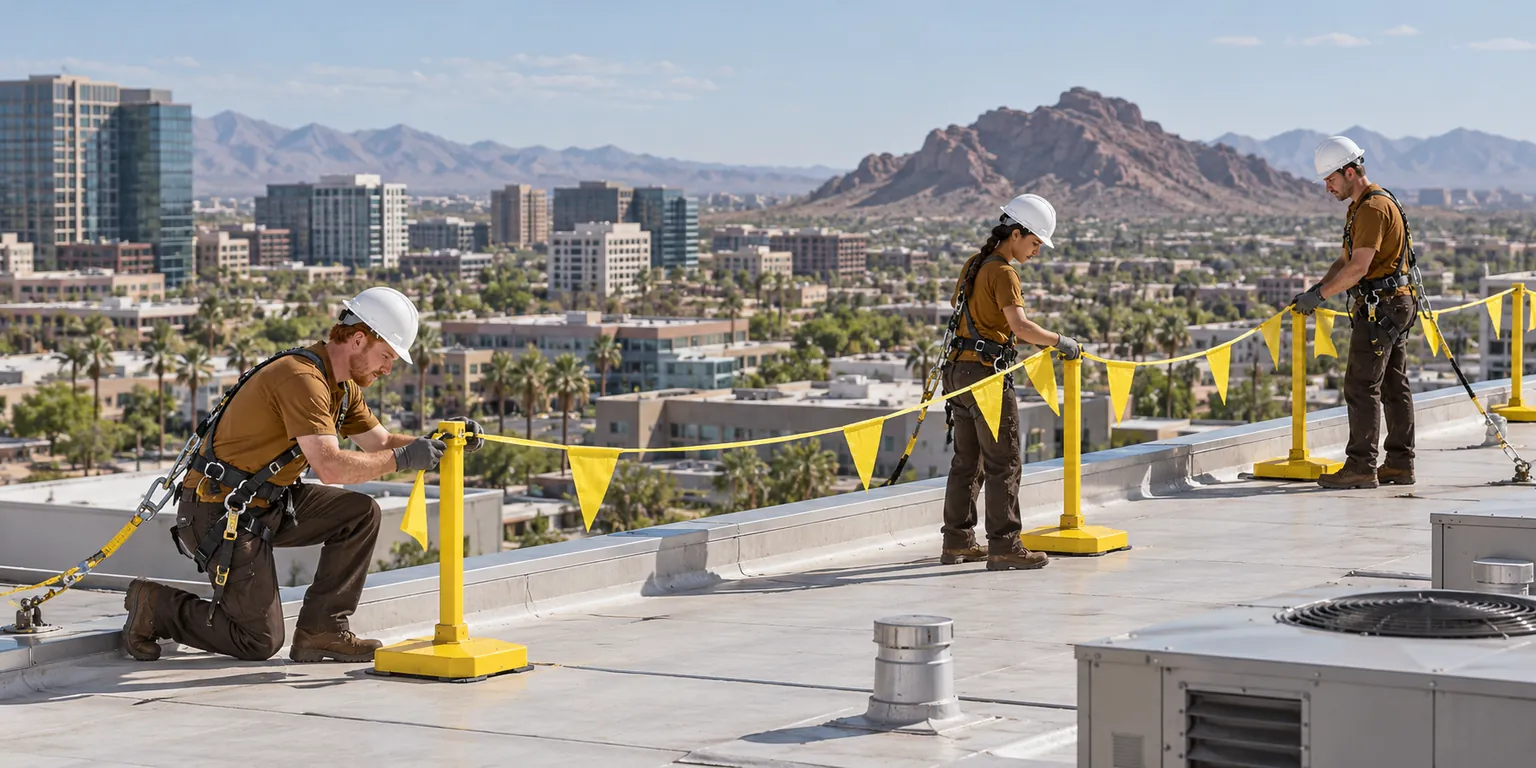
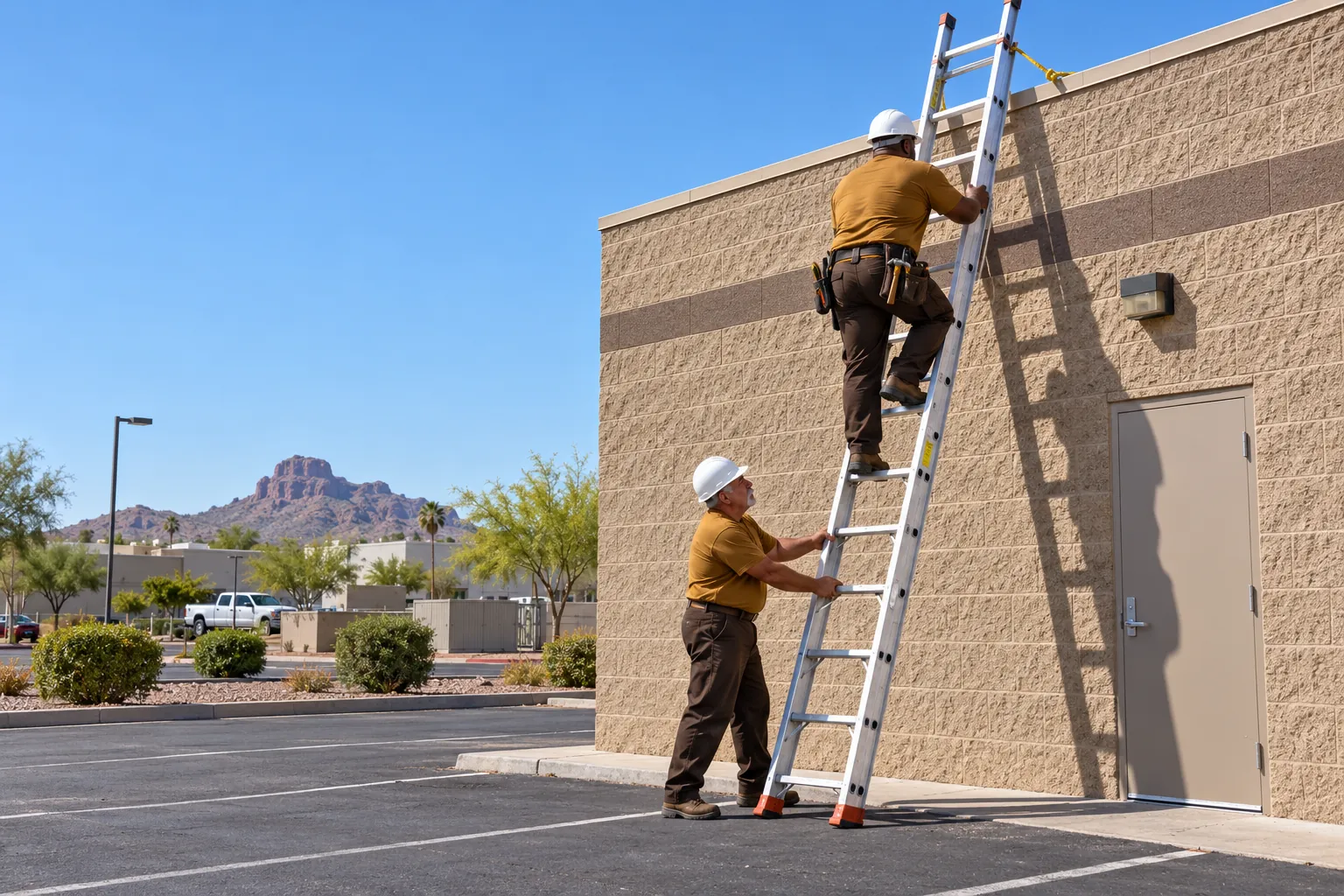
Mid-rise office roofs around the lake are usually reached through a roof hatch at the top of a stair or ladder. Everything the repair needs has to fit through that opening.
The hatch also gets opened more than any other part of the roof, so its curb flashing, gasket, and lid seal wear out and leak onto the stair or the wall below. The hatch gets checked first on every visit.
Mid-rise roofs carry larger units and longer drain runs inside the walls, and the roof hatch adds its own leak point on top of those.
Every opening flexes the hatch frame. Curb flashing cracks at its corners, and water runs down the ladder or stair wall. New curb flashing and sealed corners usually stop it, and the stair below stays dry.
A dried gasket lets wind-driven rain past the closed lid. Replacing the gasket costs little next to the damage below. A new gasket goes in during the same visit as any hatch curb repair.
Mid-rise buildings carry bigger rooftop units, and their curbs flex more under service traffic and vibration. Larger units also mean larger curb corners, and those get resealed first.
Drains on taller buildings feed long leaders inside the walls, so a loose clamp ring leaks floors below the roof. Tightening the clamp ring and checking the leader joint inside often ends the water on lower floors.
Taller parapets catch more wind. Coping joints open and send water behind wall flashing on the windward side. Coping joints get resealed and any loose coping gets refastened against the wind.
Large open fields of membrane move more in the heat, so long seam runs get probed end to end. Probing the full length catches separations before they show up as a stain inside.
On a mid-rise, water from the roof can pass through more than one floor before anyone sees it.
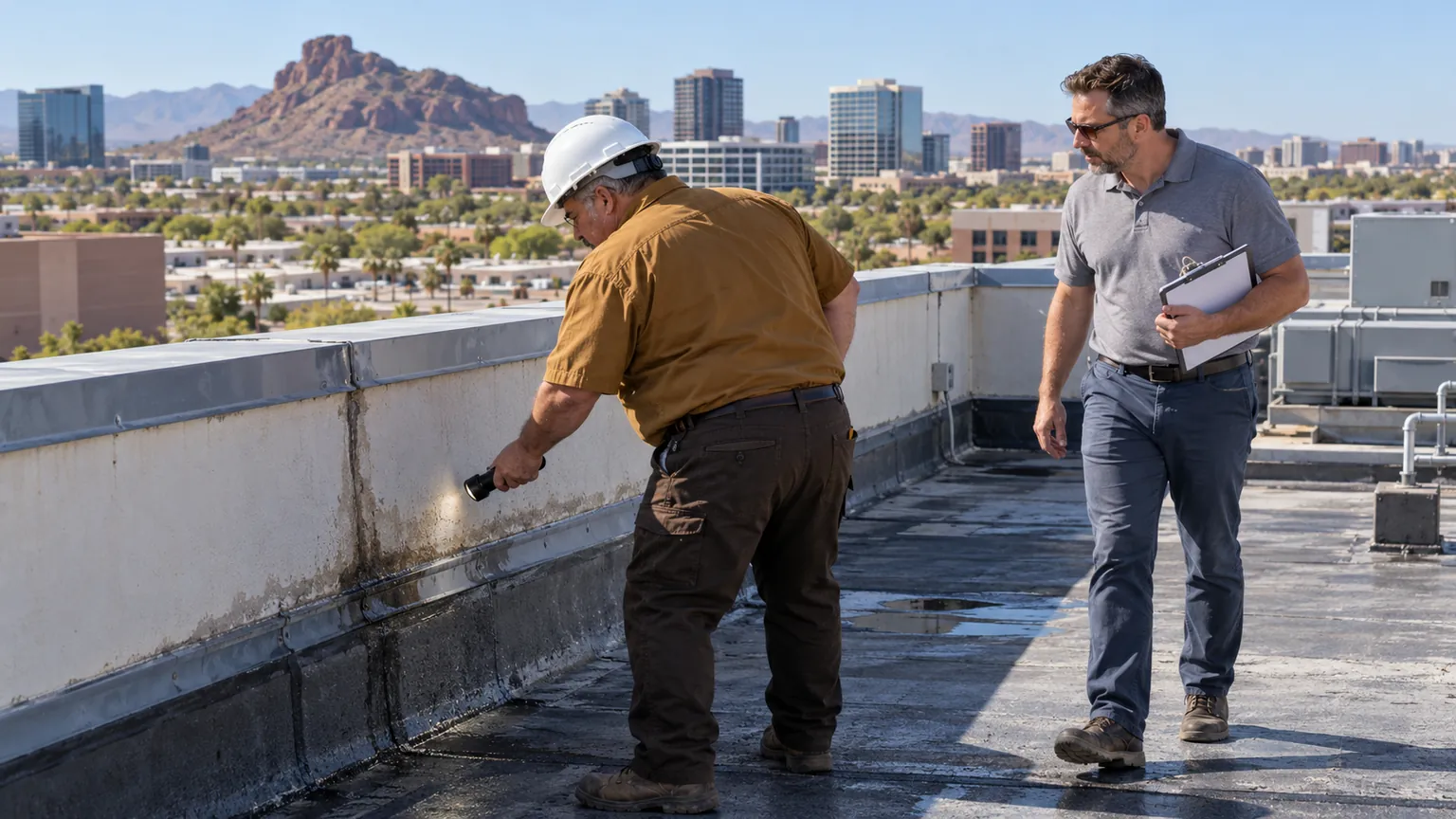
Two services cover most lakeside office calls.
Hatch curbs, unit curbs, and long seam runs on mid-rise roofs are flat roof repairs with matching membrane, carried up through the hatch in short rolls.
Flat roof repair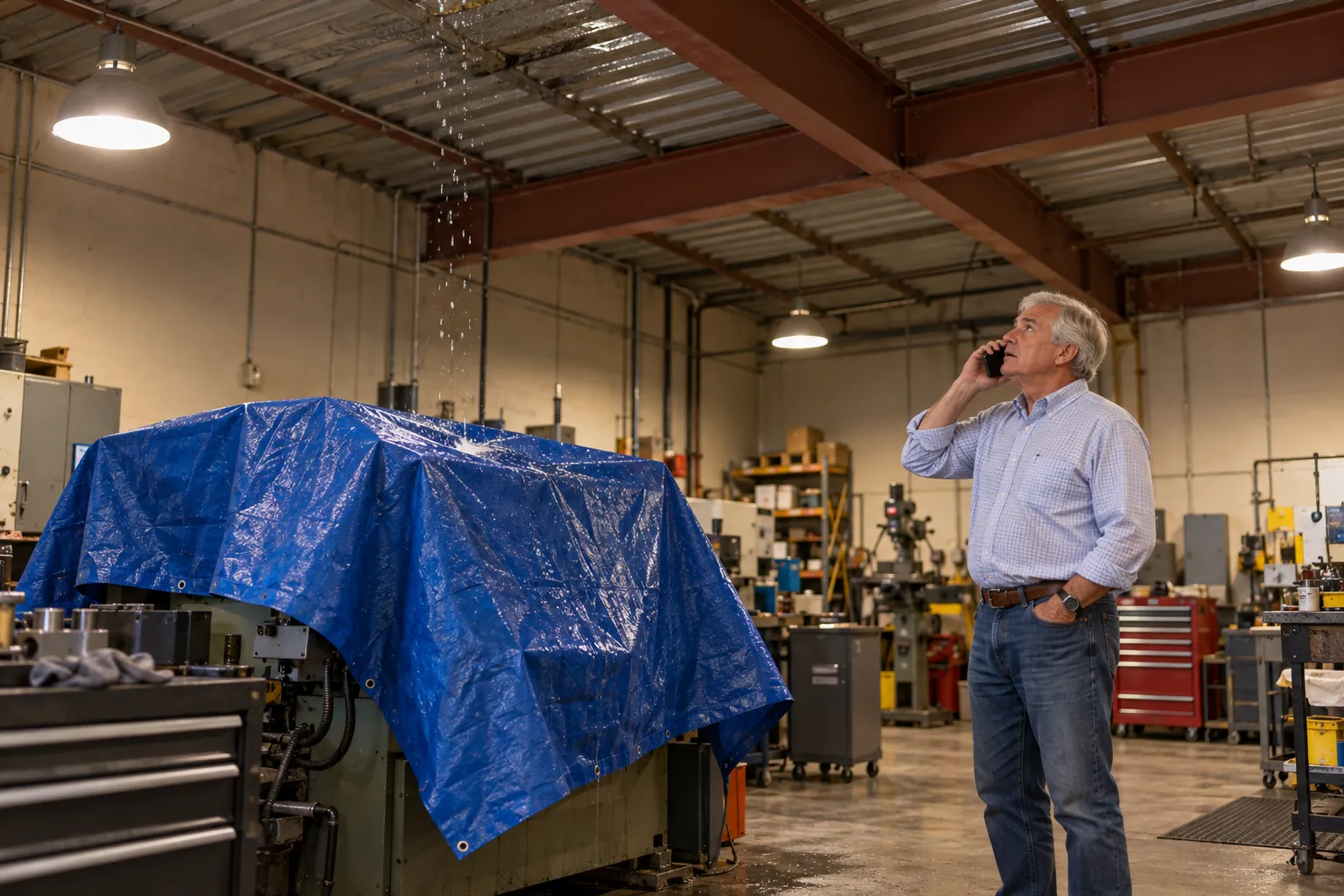
Water that shows up floors below the roof needs tracing through drain leaders and wall cavities before anything is patched.
Leak tracingCall and tell us whether it shows after rain or after someone used the hatch. The curb or the gasket is usually the cause.
Hatch access adds planning, so the steps start inside the building and end with the hatch tested and sealed.
The walk starts at the hatch itself, checking its curb, gasket, and lid, then covers units, drains, coping, and seams across the field. The hatch is often the first leak point found.
On The Roof
Leaks get matched to the floor and suite where water appears, including floors below the top one. Matching each stain to its floor helps trace water through the building.
PaperworkThe path from the loading area to the roof hatch gets agreed with building management, and the stair and top-floor hall get covered. The hatch area gets protected first, since everything passes through it.
At The BuildingMaterials come up in loads sized for the hatch. Curb flashing, gaskets, and membrane repairs go on, and the hatch area is sealed at the end of each day. Rolls are cut below so they fit the opening without folding.
On The RoofThe hatch gets a hose test while someone watches the stair below. Photos cover the hatch, units, and every repaired seam. Your photo set includes the hatch before and after the repair.
On The Roof
Tempe Town Lake sits just north of central Tempe along Loop 202.
Answers on hatches, mid-rise leaks, and where flat roofs fail first.
Where the membrane stops, turns, or gets cut. On lakeside mid-rise roofs that means seams opened by years of heat movement, drains packed with dust, unit curbs, parapet caps and coping with cracked sealant, and pitch pans that have shrunk away from their pipes.
Add the roof hatch to that list on any building where it is the only way up.
Drain leaders and wall cavities carry roof water down inside the building. A loose drain clamp or a coping joint can show up one or two floors below the roof.
Yes, when the gasket has dried out. Monsoon gusts drive rain sideways under the lid, so the gasket gets checked on every roof walk.
By hand, in loads sized for the opening. Membrane gets cut to length below, and larger items wait for a hoist or crane day if the building allows one.
Building management and any tenant on the top floor or along the hallway to the hatch. They agree on the path, the hours, and where materials wait.
The City of Tempe, through Building Safety, since the lake area is inside the city. Re-roofing and deck replacement are the jobs most likely to need one.
Buildings on the Tempe Historic Property Register go through the Historic Preservation Office for exterior changes, which can include visible roof edges and parapets.
It does. The gasket, hinges, and curb flashing wear with every use, so the hatch gets checked on each roof walk along with the ladder or stair below it.
Tell us the building height and where the hatch sits. We will plan the access and repair what is leaking.
Want A Call Back About Your Roof?
Leave a name and number, or call (623) 310-0181 now.