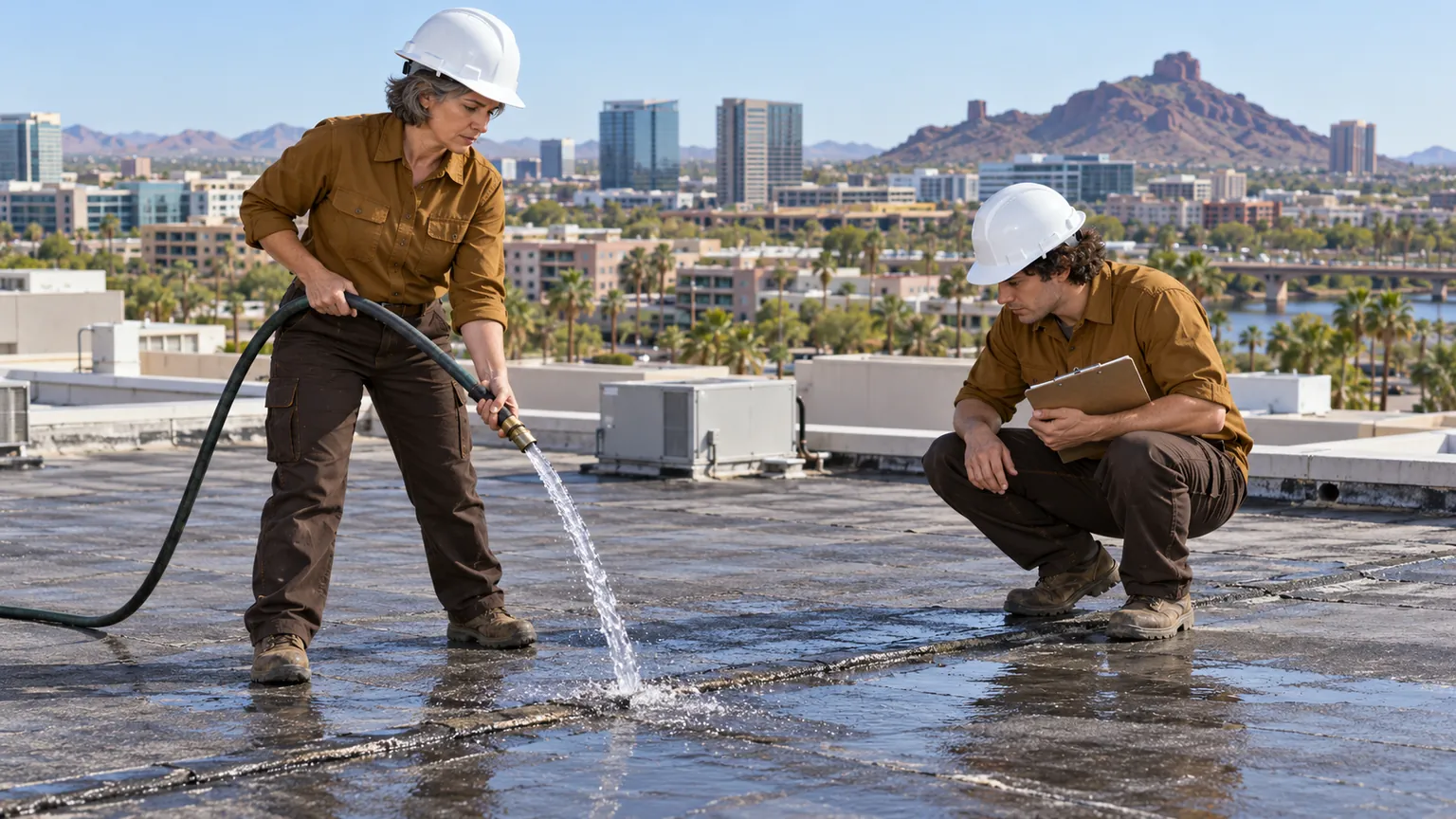
Commercial Roof Leak Repair
A stain that shows up far from any open seam calls for leak tracing before the flat roof patch goes down.
Commercial roof leak repair
TPO · EPDM · Mod Bit · Built-Up
Flat roof repair in Tempe means fixing the damaged section with the same material the roof already has, after testing whether a sun-baked sheet still takes a weld.
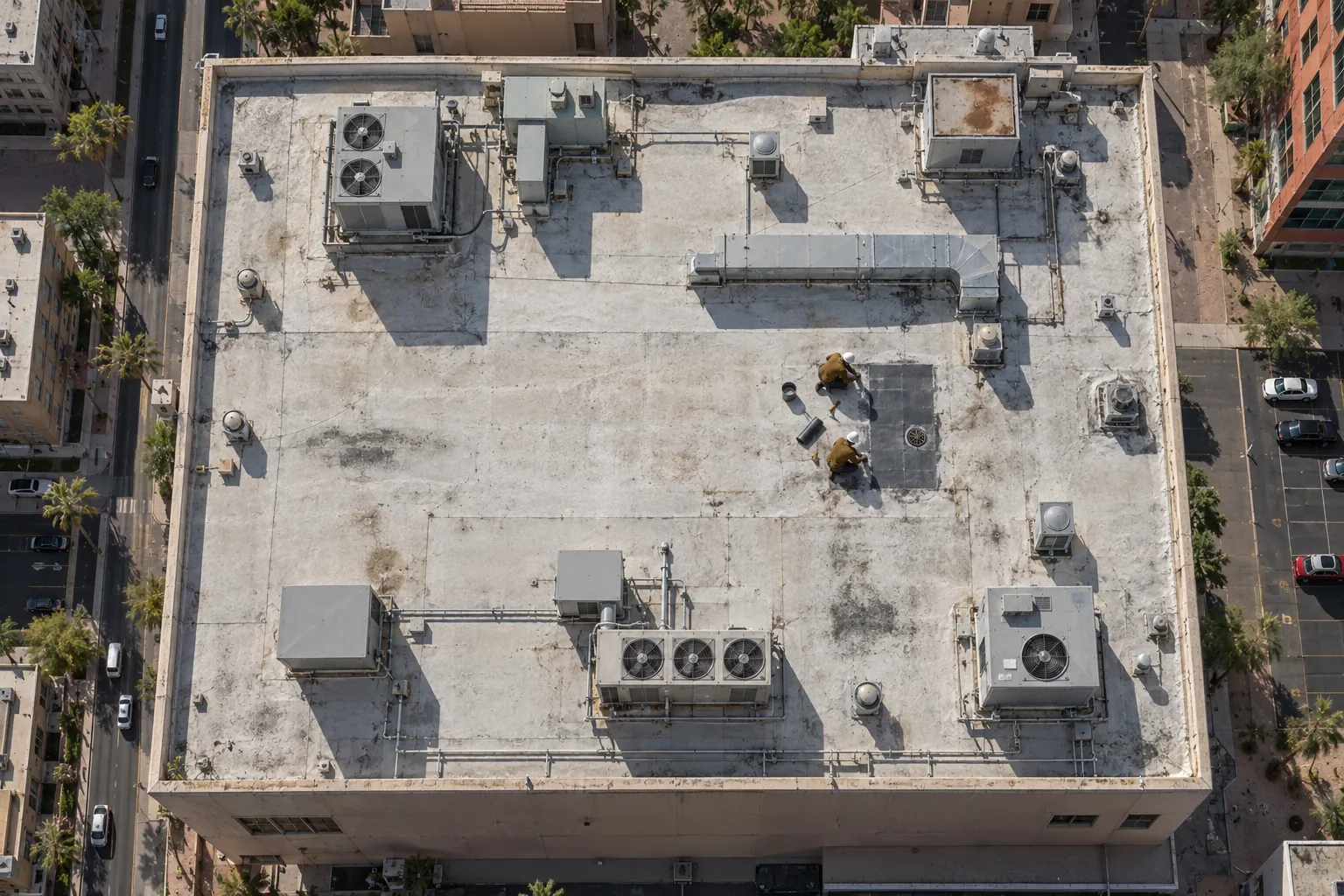
Flat roofs fail at details, which repair well, or across the whole field, which points to replacement. The roof walk sorts out which one you have.
These six details are where flat roof leaks usually start in Tempe, and each one has its own repair.
Heat-welded laps can let go after years of expansion and contraction. A probe run along the seam finds the gap, and a fresh hot-air weld or a cover strip closes it. Seams near curbs and drains get the closest look, since water sits there longest.
Trapped moisture or air lifts the membrane into soft bubbles that split under foot traffic. We cut them out, dry the spot, and patch with matching sheet. A blister that has not split yet still gets cut out, because foot traffic will open it.
Low spots around a drain hold water for days and leave a dirt ring. Clearing the strainer comes first; a spot that still holds water gets tapered insulation. If the drain bowl sits above the field, it gets reset lower so water reaches the strainer.
Flashing that climbs the wall dries out and pulls away at its top edge. It gets rebuilt with new sheet, a termination bar, and fresh sealant at the joint. Counterflashing or a metal cap goes over the top edge so sun and rain stay off the seal.
Inside and outside corners at rooftop unit curbs crack first because the sheet folds there. Prefabricated corners or hand-formed patches seal them back up. On TPO the corners get welded; on EPDM they get pressure-sensitive corner flashing pieces.
Where gravel has washed or blown off a built-up roof, sun dries the bitumen until it cracks. We patch the plies and set fresh gravel over the repair. Fresh gravel also keeps sun off the bitumen, which is what dried out the plies in the first place.
Each repair matches the roof system already on the building, so the patch moves with the sheet around it.
| Roof System | Common Failure | Repair We Make |
|---|---|---|
| TPO | Open welds at laps and curb corners | Clean the sheet, then re-weld with hot air or weld on a cover strip |
| EPDM | Seam tape letting go, shrinkage at the edges | Seam primer and new tape, with cover tape along shrunken edges |
| Modified bitumen | Cracked cap sheet and open laps | Cut back to firm sheet and patch with matching cap sheet |
| Built-up gravel | Bare spots and blisters between plies | Scrape the gravel, patch the plies, and re-embed gravel |
| Any flat system | Dried parapet and pipe flashing | Rebuild the flashing and reset pitch pans and pipe boots |
Flat roofs hold water longer than sloped ones, so a small opening soaks more insulation with every storm it stays open.
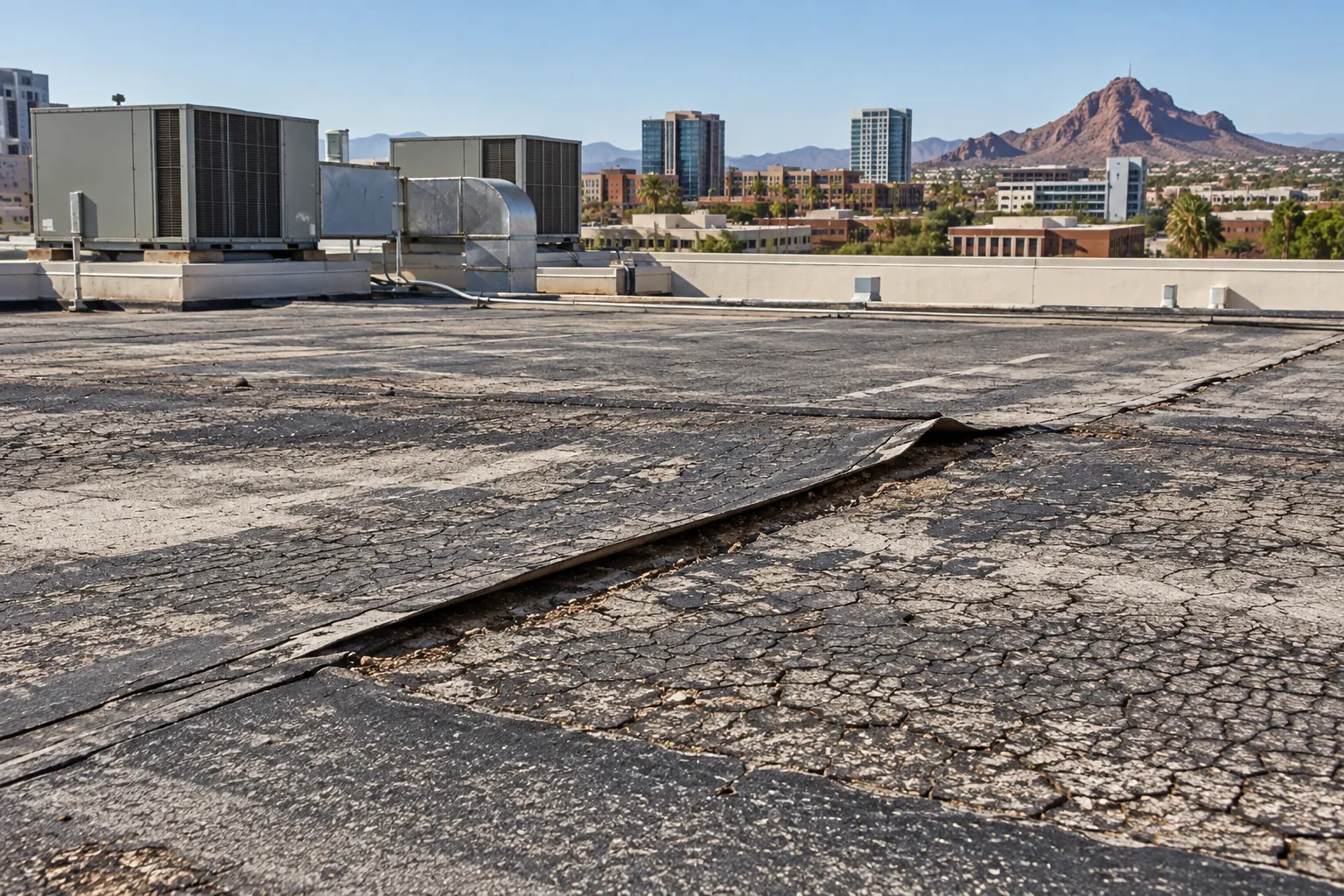
Call with how many days water stands after a storm and whether you can see the drain strainer. Clearing a packed drain is often the first fix.
Five steps, from the first moisture reading to the photos you keep for your maintenance file.
A moisture meter runs across the field and around every curb, drain, and parapet. Any reading above the dry baseline gets marked for a core cut. Core cuts get patched before the crew leaves the roof.
On The Roof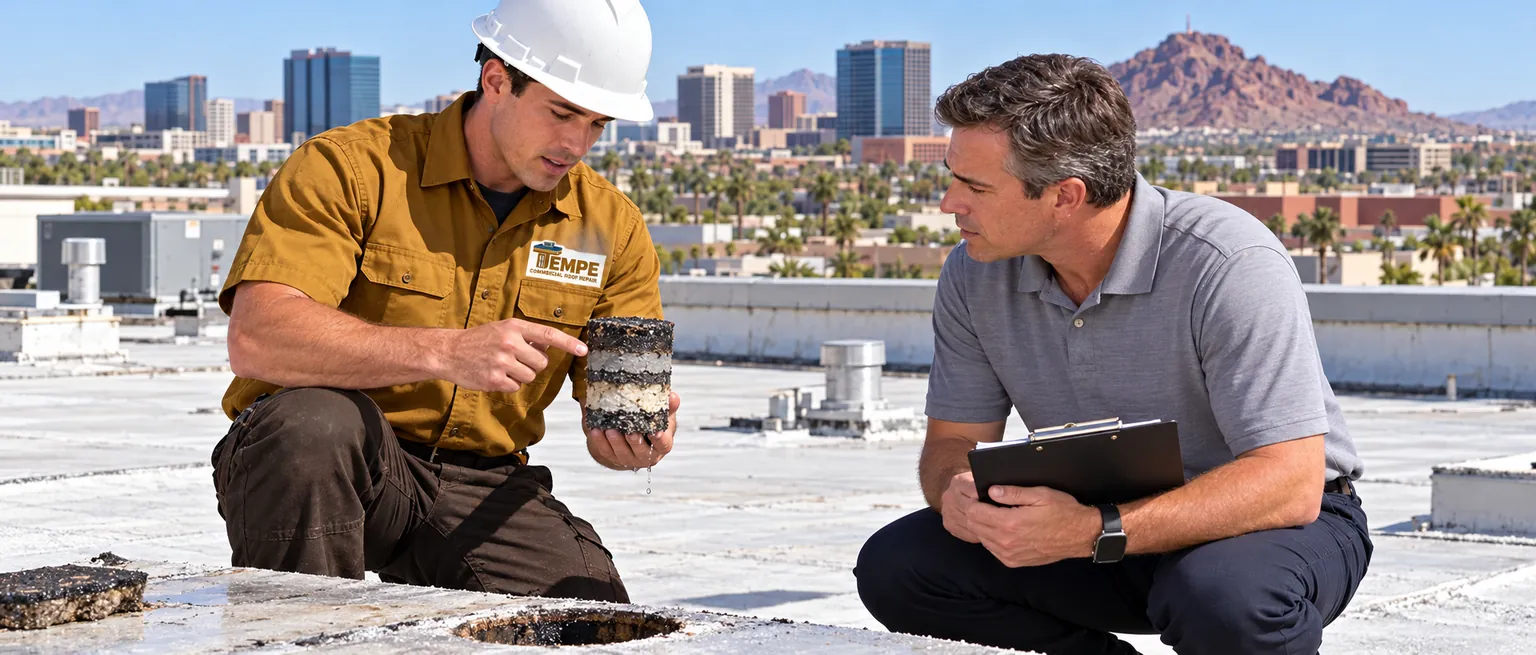
Open welds are probed, blisters pressed, and pitch pans checked for shrinkage. Each problem gets a number on a roof sketch and a photo. You see the numbered list before any repair is priced.
On The RoofTenants under the work area get a heads-up, and sheeting goes over anything wet or sensitive before the crew cuts into the membrane. Rooftop units stay running unless their curb is the one being repaired.
At The BuildingTest patches show whether the old sheet still bonds. Then wet insulation comes out, new boards go in, and new sheet is welded, taped, or set in place. Every patch extends past the damage onto firm, clean sheet.
On The Roof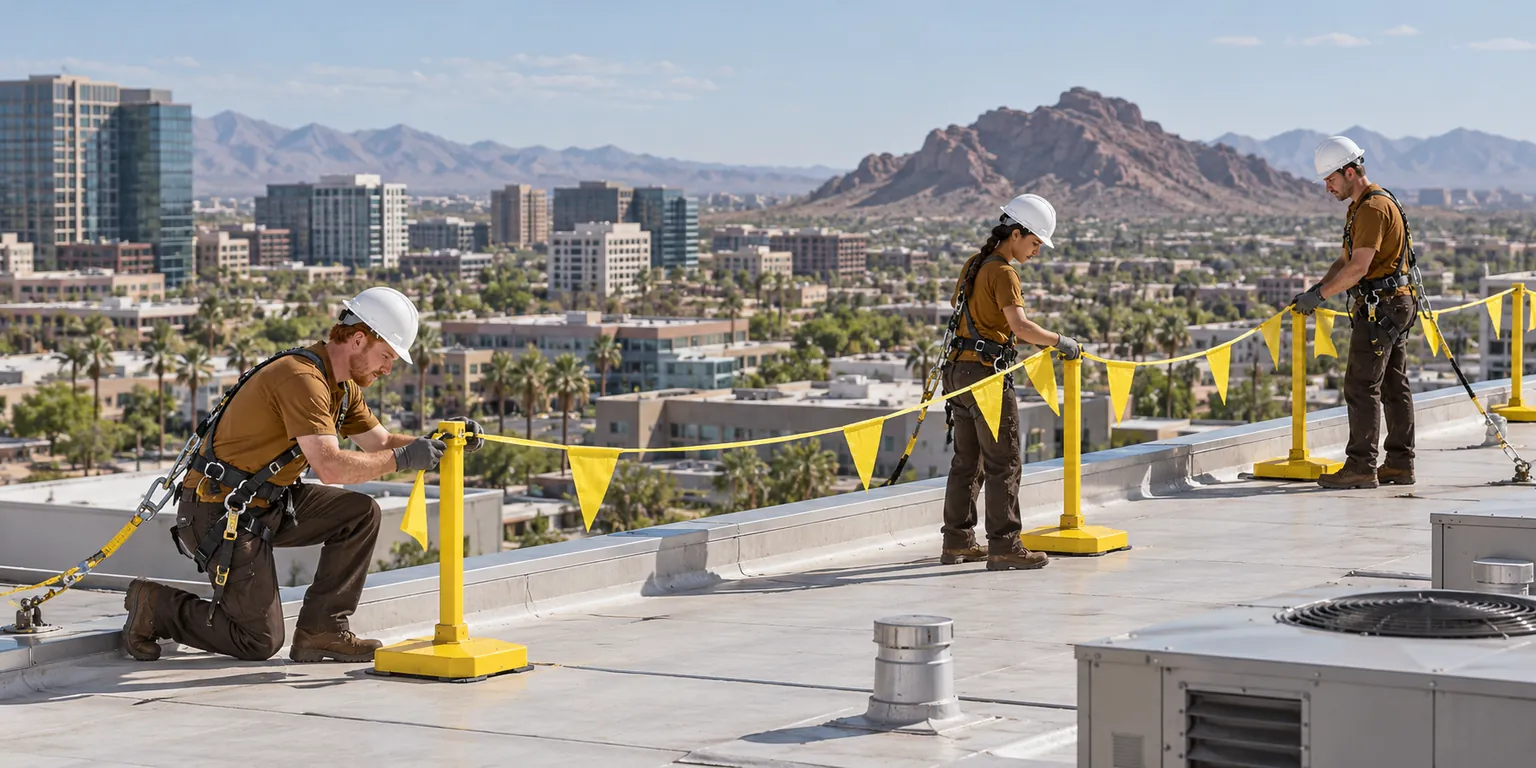
Seams get probed again once they cool, and drains get a flow check. You keep the numbered sketch with photos of each repair. The sketch also flags details that are aging but still holding.
PaperworkFlat roof work often overlaps with these two services.
A stain that shows up far from any open seam calls for leak tracing before the flat roof patch goes down.
Commercial roof leak repair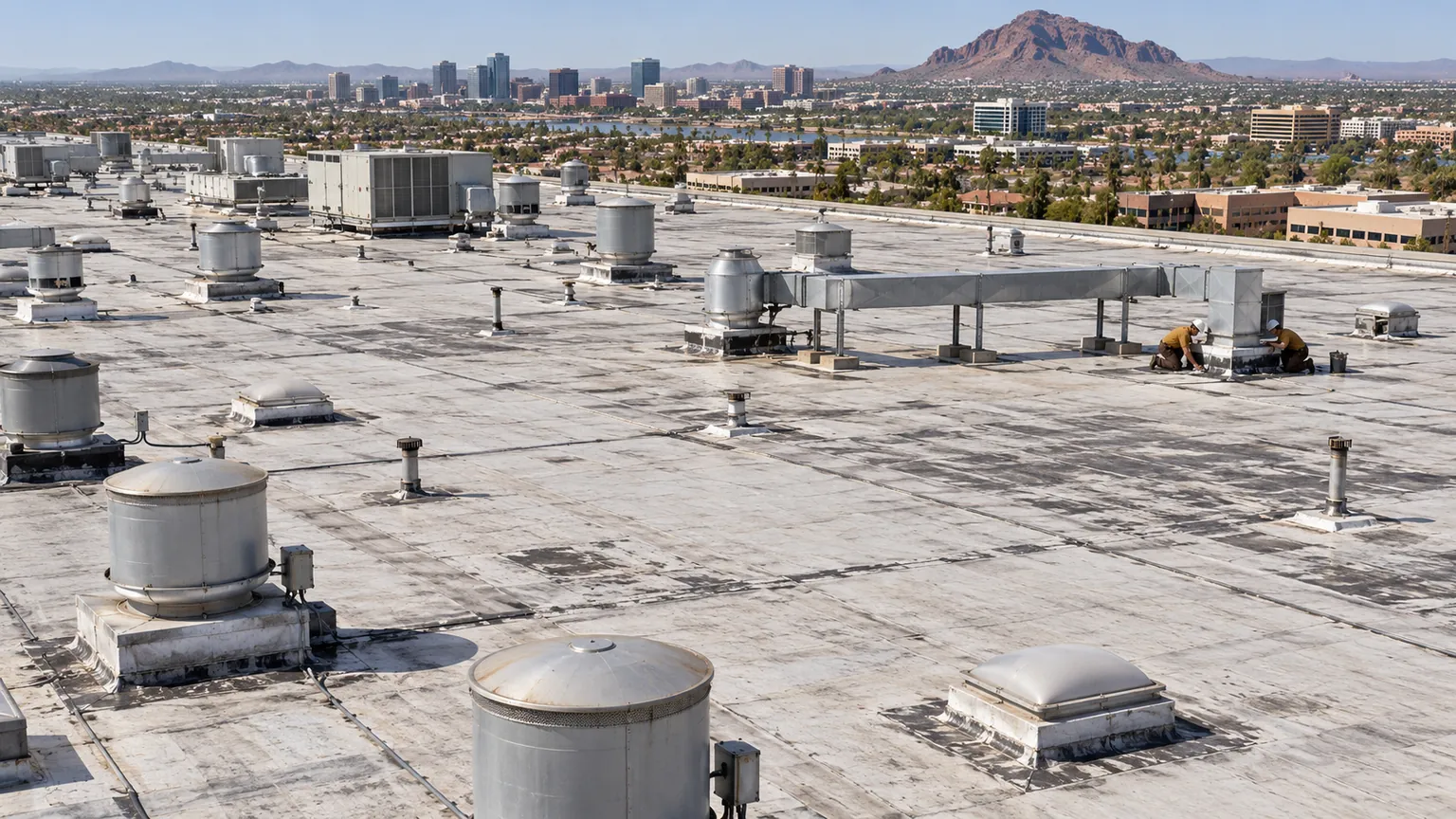
Plant roofs with exhaust fans and process vents need residue cleanup and production-aware scheduling around the patch.
Industrial roof repairAnswers about the repair itself, drainage, and the different flat roof materials.
Matching what is already up there. The crew identifies the sheet (TPO, EPDM, modified bitumen, or built-up gravel), then tests a small weld or patch to see whether sun-baked membrane still bonds before repairing the failed section.
On most Tempe flat roofs that means re-welding seams, cutting out blisters, rebuilding parapet flashing, or fixing a low spot where a ponding ring keeps forming by a drain.
Rarely well. Each layer of mastic or tape bonds only to what sits under it, so old patches get cut back to clean membrane and the repair starts from there.
Big enough to reach firm, dry sheet on every side of the damage. Small punctures get a patch a few inches past the hole, while a blister or wet spot gets cut back to dry insulation, which is often much larger than the stain inside suggested.
Usually a dust-packed strainer, a drain bowl set high, or insulation that has compressed around the drain. Clearing the drain comes first, and a low spot that still holds water gets tapered insulation.
Ponding is standing water on top of the roof. It becomes a leak once a seam, blister, or old patch inside the wet area opens, and water sitting for days makes that more likely.
No. The two sheets use different chemistry, so a transition between them needs a compatible tape or a separate flashing detail, and each side gets repaired with its own material.
Yes. Cold-applied adhesive and self-adhered cap sheet handle most modified bitumen patches, which keeps open flame away from vents, intakes, and stored materials near the roof.
Tell us the roof type if you know it and where water shows inside. We will walk the roof and mark what needs repair.
Want A Call Back About Your Roof?
Leave a name and number, or call (623) 310-0181 now.