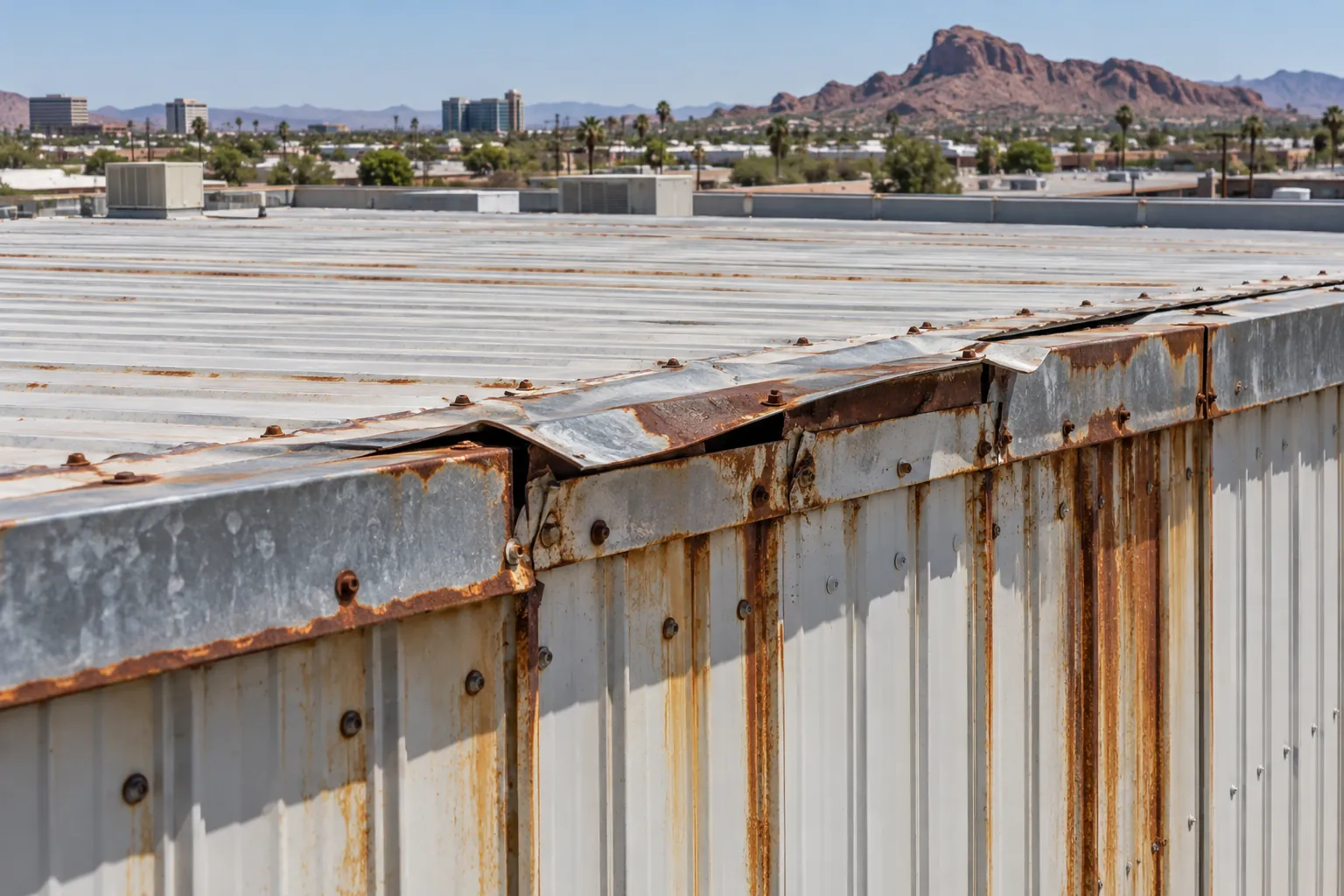
Commercial Metal Roof Repair
Many shop and plant buildings have metal panel roofs, where fasteners and laps loosen under fan vibration and heat.
Commercial metal roof repair
Curbs · Stacks · Residue · Scheduling
Industrial roof repair in Tempe gets planned around your production schedule first, then the crew cleans residue off the membrane and rebuilds curb flashing at your equipment.
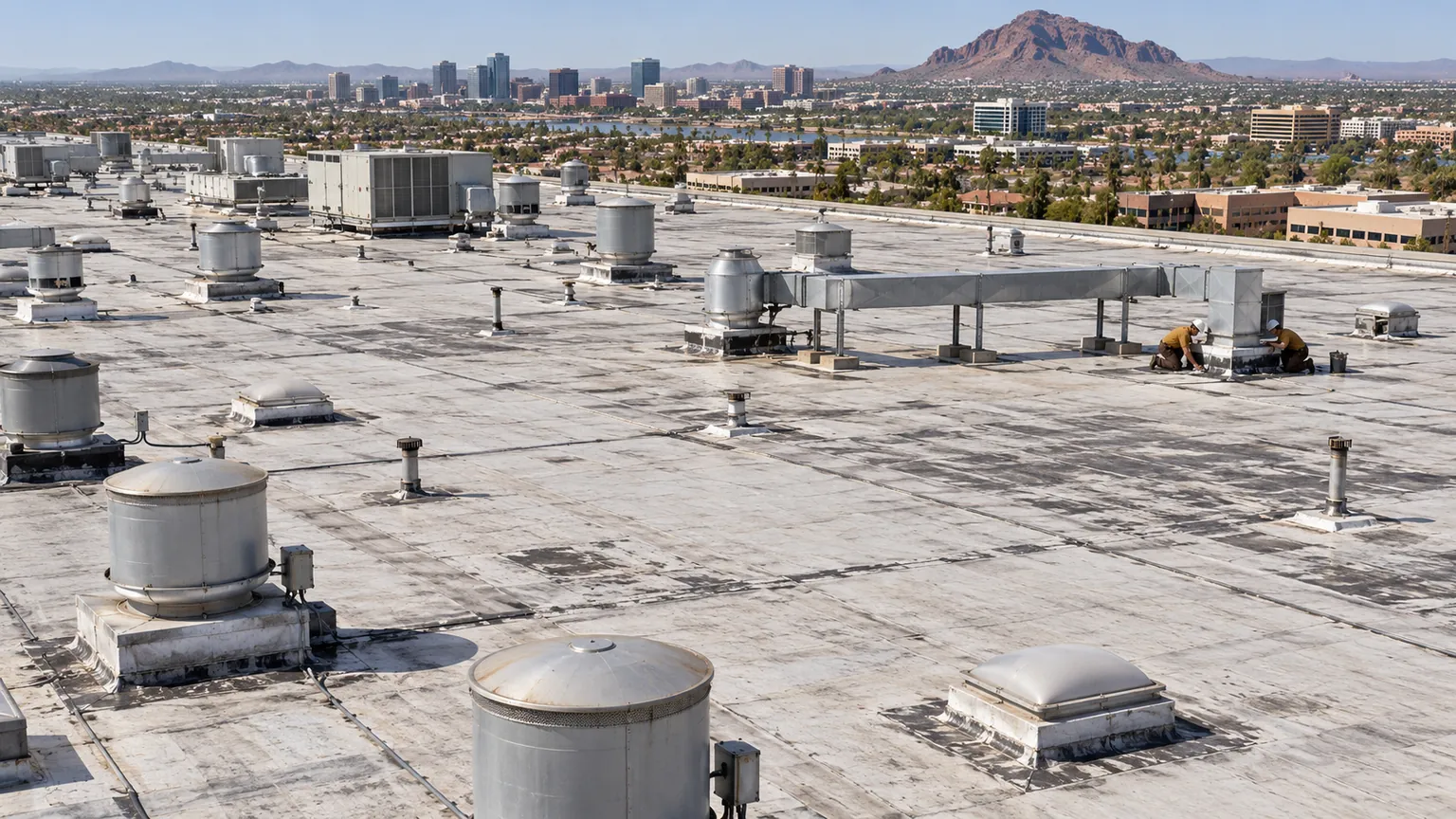
Industrial roofs often fail around equipment while the open field holds up. Residue damage across the field changes that.
Equipment drives most industrial roof leaks. These six spots get checked on every plant roof walk.
Fans vibrate their curbs and drop residue around them. Flashing cracks at the corners, and the membrane softens where oil collects. Fan curbs get checked for loose mounting bolts too, since vibration cracks the flashing faster when bolts loosen.
Stack flashings take heat and discharge at the same time. Storm collars and boots dry out and pull away from the pipe. Storm collars get resealed and their clamps tightened so they stay on through monsoon wind.
Heavy collectors and their pads concentrate weight and foot traffic. The membrane around the pad wears through from service visits. Protection pads under and around the collector spread the load and take the wear instead of the membrane.
Rows of units share long runs of curb flashing, and one bad corner can send water along the deck under the whole row. Long curb runs get checked corner by corner, since one corner can wet a long stretch of deck.
Supports set directly on the membrane cut into it as pipes expand. Raised supports on pads stop the wear. Supports get moved onto pads without shutting down the line, with the pipe owner present.
Process dust and residue pack drain strainers faster than on office roofs, so water ponds around equipment. Strainers on plant roofs get cleared on every visit, along with the leaders they feed.
Plant roof repairs mix ordinary membrane work with steps that protect production and equipment.
| Work | Why It Matters On A Plant Roof | How We Handle It |
|---|---|---|
| Residue cleanup | Patches bond poorly to oil and dust | Clean and dry the area before patching |
| Compatibility check | Some discharge softens some membranes | Match the patch to what the stacks emit |
| Curb and stack flashing | Vibration and heat crack the corners | Rebuild flashing and storm collars |
| Hot work planning | Vents and intakes sit close to repairs | Coordinate welds and torches with your team |
| Walkway protection | Service traffic wears the membrane | Pads on paths to units and collectors |
On a plant roof, the leak lands on production equipment, stock, or electrical gear instead of a ceiling tile.
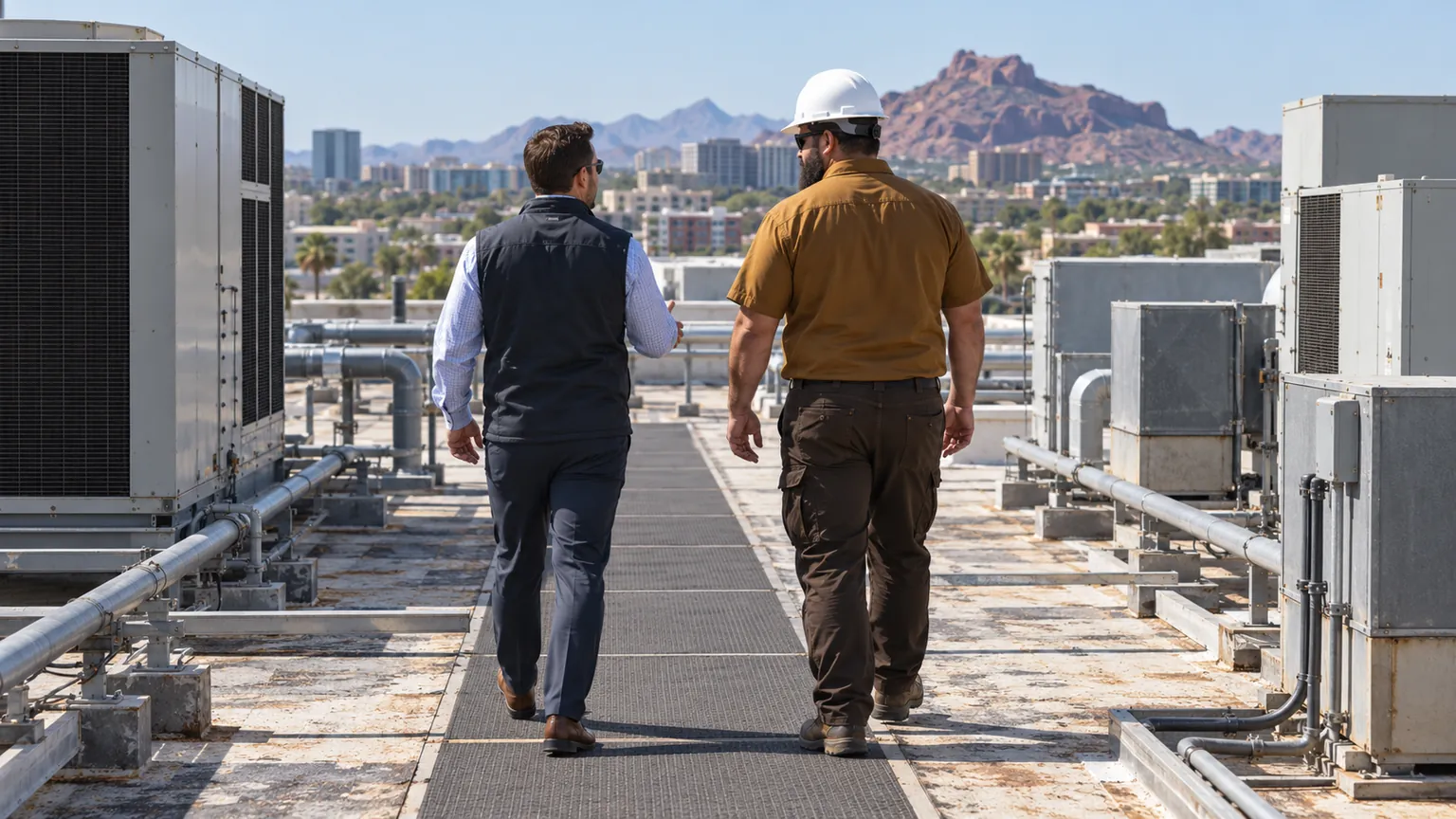
Call with the line or bay where water shows, what equipment sits above it, and when your next shutdown or slow shift falls.
Five steps that put the production schedule in front of the roof work.
The roof walk maps every fan, stack, vent, and collector, notes residue around each one, and checks curb flashing corners and drain strainers. The roof sketch numbers every piece of equipment for later reference.
On The Roof
Leak spots get matched to the bays below, and samples of residue near vents help confirm what the patch membrane has to resist. Inside, each wet bay gets matched to the equipment row above it.
On The RoofYour facility team sets the roof work windows, the hot-work permit, and which intakes get shielded. Noisy work can shift to off-shift hours. Lockout on fans and collectors stays with the team that runs them.
PaperworkResidue gets cleaned off, the area dries, and curb flashings and patches go on with material that holds up to the discharge. Patches extend past the softened area onto clean, firm membrane.
On The Roof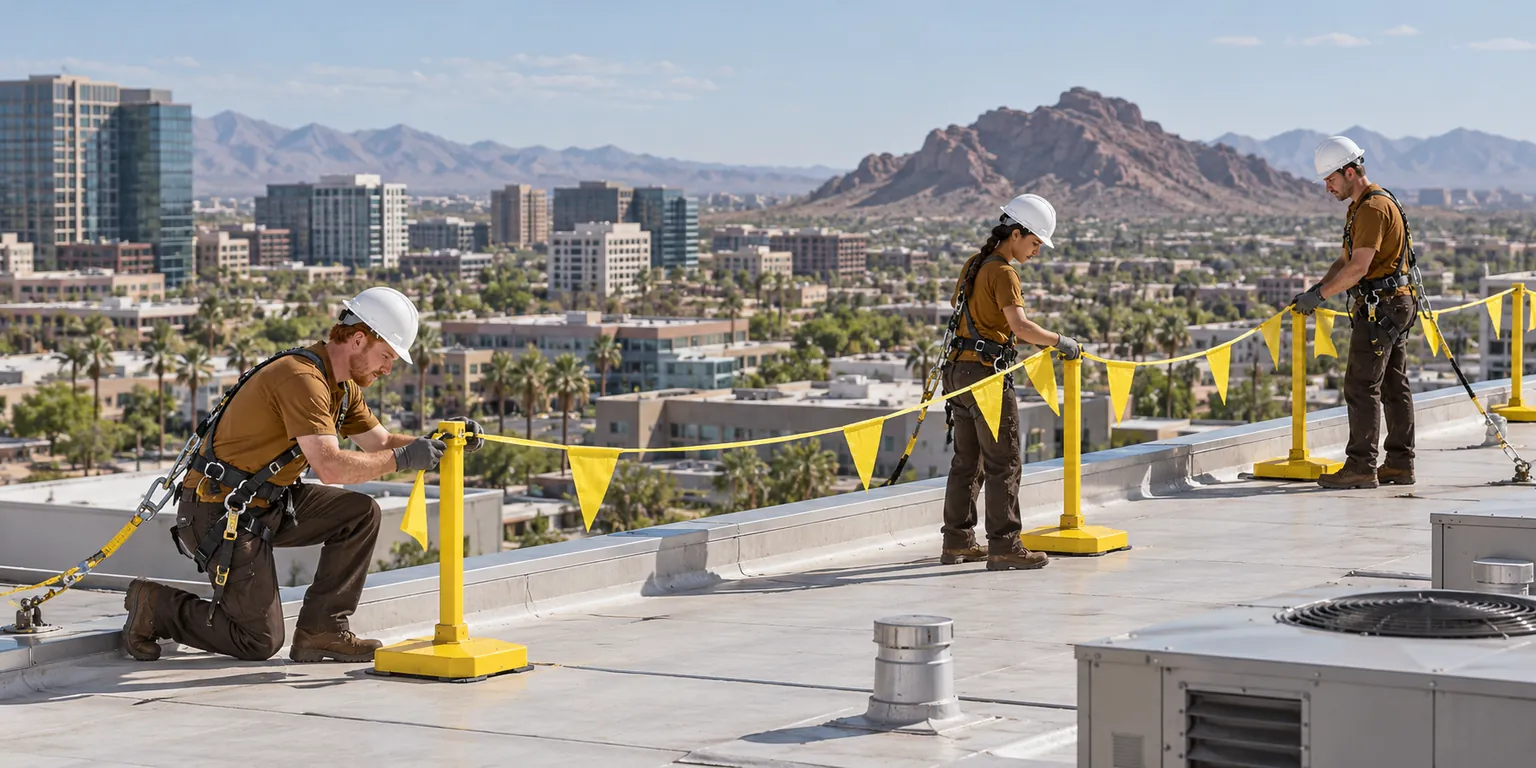
Repaired curbs get a hose test, and walkway pads go down on service paths. Photos show each piece of equipment that was worked on. Photos show each curb and stack with its number from the roof sketch.
At The BuildingPlant roofs often need one of these alongside the equipment work.
Many shop and plant buildings have metal panel roofs, where fasteners and laps loosen under fan vibration and heat.
Commercial metal roof repair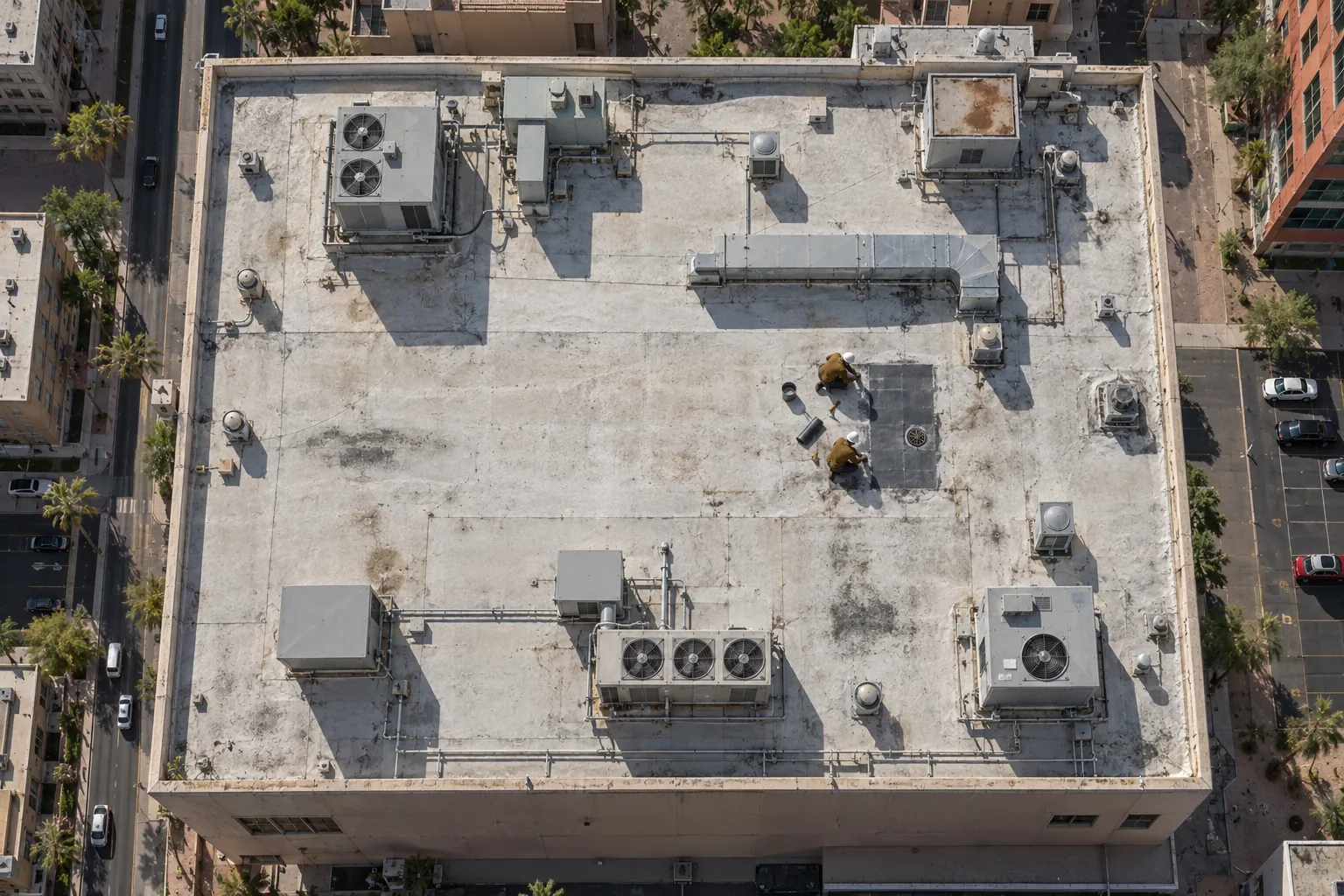
Low-slope plant roofs between equipment rows need ordinary flat roof repair at seams, blisters, and parapet flashing.
Flat roof repairAnswers about working around equipment, residue, and production schedules.
Your schedule sets the plan. On Maker District fabrication and manufacturing roofs, exhaust fans, process vents, and dust collectors coat the membrane with oil or residue, so those areas get cleaned before anything is patched.
The patch material gets checked against what the stacks discharge, curb flashings around the equipment get rebuilt, hot work near vents and intakes runs through your facility team, and loud work can move to off-shift hours.
Usually only the units being worked on. Fans and collectors with curbs under repair get locked out for that window, and the rest of the roof keeps running.
Yes, and plants often prefer it. A planned shutdown lets the crew lock out fans and collectors, clean residue, and rebuild curb flashing in one window, with roof work around running equipment saved for the rest.
Some membranes soften and swell when oil or grease sits on them. The softened area gets cut out, and the patch uses a membrane rated for that kind of discharge.
As often as it builds up around fans and vents. Many plants add it to each spring and fall roof walk, along with clearing drains that residue packs.
The people who run the equipment: your facility team or HVAC contractor. The roof crew works on curbs and flashing only after the equipment is locked out and tagged by the people who run it.
On paths that service techs use often, they pay off. Pads spread foot traffic and keep tools and parts off the membrane between the hatch and the equipment.
Tell us which bay is wet and when your next slow shift falls. We will walk the roof and plan the work with your team.
Want A Call Back About Your Roof?
Leave a name and number, or call (623) 310-0181 now.